




Summarize With AI


Most teams aren't failing because of a skills gap. They're failing because nobody's measured what actually makes a team high-performing versus just busy. If you're trying to figure out why one team consistently ships and another consistently stalls, the answer usually isn't talent. It's a specific, researchable set of dynamics, and this guide walks through what the actual research says.
We360.ai works with more than 120,000 users across 10,000-plus companies in 21-plus countries, and the teams that show up as "high-performing" in our own activity data almost always share the same few traits covered below.
What is a high-performing team?
It's a group that consistently delivers strong results while operating with high trust, clear roles, and shared accountability, not just a team that happens to hit its numbers once. The difference matters: a team can hit a quarterly target through overtime and still be dysfunctional underneath.
What is team dynamics? Team dynamics are the patterns of interaction, communication, and behavior between team members that shape how well they work together, for better or worse.
Real high performance shows up as a repeatable pattern, not a single good quarter. A team that ships fast because everyone's burned out isn't high-performing. It's borrowing from next quarter.
The McKinsey high-performing teams model
McKinsey's research on what separates these teams from the rest, based on interviews with more than 5,000 executives about their best team experiences, found three dimensions that matter most: alignment on a shared direction, high-quality interaction built on trust and open conflict, and a sense of renewal that keeps the team learning and taking risks, according to McKinsey & Company.
Alignment means everyone can describe the goal the same way, without checking a slide deck first. High-quality interaction means disagreements happen out loud, in the room, instead of in side conversations after the meeting ends. Renewal is the one teams skip most: without it, even a well-aligned, trusting team eventually goes stale.
The payoff is measurable. Teams scoring above average on trust are 3.3 times more efficient and 5.1 times more likely to produce strong results than low-trust teams, and teams strong on decision-making produce 2.8 times more original ideas, per McKinsey's 2024 research on team health.
7 characteristics of high-performing teams
They share seven traits that show up repeatedly across McKinsey, Google, and Gallup's research: clear alignment on goals, high trust, psychological safety, complementary skills, mutual accountability, strong communication, and a habit of renewal instead of burnout.
- Clear alignment. Everyone on the team can state the goal in one sentence, the same way.
- High trust. Disagreements happen openly instead of building up as resentment.
- Psychological safety. People raise a bad idea, a mistake, or a risk without fear of it being held against them.
- Complementary skills. The team covers its actual gaps, not just a stack of similar résumés.
- Mutual accountability. Missed deadlines get addressed inside the team, not escalated straight to a manager.
- Strong communication. Status updates happen before someone has to ask for them.
- A habit of renewal. The team makes time to learn and adjust instead of just grinding through the backlog.
None of these traits require a bigger budget. They require a manager willing to name the gap when one shows up.
The 5 elements every high-performing team needs
Jon Katzenbach and Douglas Smith's research into what separates a real team from a working group identified five elements: complementary skills, a shared and specific commitment to common goals, mutual accountability, a small enough size to actually coordinate, and a clear approach to how the work gets done, based on their study of dozens of teams across more than 30 organizations, per Warwick Business School's summary of the research.
The size point gets ignored constantly. A team of 15 people rarely operates with the same accountability as a team of 6, even with identical goals and skill sets. If a "team" needs a wiki page just to track who owns what, it's usually too big to be a real team in Katzenbach and Smith's sense.
Why psychological safety matters more than skill
Psychological safety, not raw talent, was the single biggest factor separating Google's most effective teams from its least effective ones, according to the company's internal Project Aristotle research, which studied 180 teams over two years, as reported by the New York Times Magazine.
[Image: A simple diagram showing the five Project Aristotle team dynamics, with psychological safety at the top - alt='Google Project Aristotle five dynamics of effective teams diagram']
Psychological safety means someone can say "I don't understand this" or "I think we're about to miss this deadline" in a standup without it costing them later. Teams that lack it don't look dysfunctional from the outside. They just quietly stop raising problems until the problems become too big to hide.
This is also where engagement and performance connect directly. Business units in Gallup's top engagement quartile outperform the bottom quartile by 23% in profitability, 18% in productivity, and 78% in absenteeism, according to Gallup's Q12 meta-analysis. Psychological safety is one of the biggest levers behind that gap.
What breaks a high-performing team
Team dysfunction almost always traces back to one root cause: an absence of trust, which then cascades into fear of conflict, lack of real commitment, avoidance of accountability, and finally inattention to shared results, according to Patrick Lencioni's Five Dysfunctions of a Team framework.
The pattern is worth watching for directly. If a team avoids real disagreement in meetings, that's rarely politeness. It's usually the first sign trust has already eroded, and everything downstream, missed commitments, dropped accountability, gets harder to fix the longer it goes unaddressed.
Building high-performing teams on remote and hybrid setups
Remote and hybrid teams need the same five elements as any in-person team, but communication and mutual accountability take deliberate structure instead of happening by proximity. A high-performing remote team can't rely on hallway conversations to catch a slipping deadline, so the update has to happen somewhere visible by default.
Practical moves that hold up in distributed teams:
- Default to async written updates before status meetings, so nobody's waiting on a live meeting to flag a risk.
- Make engagement data visible to the whole team, not just the manager, so accountability doesn't rely on one person remembering to follow up.
- Watch for the same early disengagement signals you'd catch in person: dropping participation, late responses, and silence in discussions that used to get input.
- Build renewal into the calendar deliberately. Remote teams skip it first, since there's no shared office rhythm forcing a pause.
How We360.ai helps you catch team dynamics before they slip
We360.ai gives managers visibility into the behavioral signals behind team health, like workload imbalance, falling participation, and shifting collaboration patterns, before a strong team quietly turns into a struggling one. Instead of finding out in a retro that half the team felt unheard, the data flags the pattern while there's still time to fix it.
That same visibility helps managers separate a genuinely disengaged team member from someone who's just quiet, and catch early burnout signs before they turn into a resignation. We360.ai is SOC 2 Type II and ISO 27001-aligned, so the activity data driving these calls is handled to the same standard you'd expect from any enterprise HR system.
Ready to see how your own teams are actually performing? Start Free Trial and pull your first team health report this week, or book a demo if you'd rather see it walked through first. Full pricing starts at ₹299 per user per month.
What drives high performance teams? +−
Alignment on a shared goal, high trust, and psychological safety drive high performance teams, according to research from McKinsey and Google. Teams strong on trust are 3.3 times more efficient than low-trust teams, and psychological safety was the top predictor of success in Google's Project Aristotle study.
What are the 7 characteristics of a high-performing team? +−
Clear alignment, high trust, psychological safety, complementary skills, mutual accountability, strong communication, and a habit of renewal instead of burnout. These traits repeat across McKinsey, Google, and Gallup's research on team effectiveness.
What are the 5 elements of high performance teams? +−
Complementary skills, a shared and specific commitment to common goals, mutual accountability, a small enough size to coordinate easily, and a clear approach to the work itself, per Jon Katzenbach and Douglas Smith's classic research on team effectiveness.
What's the difference between a high-performing team and just a busy team? +−
It delivers strong results while operating with trust, clear roles, and shared accountability. A busy team can hit the same numbers through overtime and burnout, which usually shows up as turnover within a year or two.
Can a remote team be a high-performing team? +−
Yes, but it needs deliberate structure instead of relying on hallway conversations. Async written updates, visible engagement data, and scheduled time for renewal replace the coordination that used to happen by proximity in an office.
Related Posts
A well-designed employee engagement survey can reveal what employees really think about their roles, managers, recognition, growth, and workplace culture. This guide explains what to ask, how often to survey employees, how to improve response rates, and how to turn survey results into meaningful workplace action.
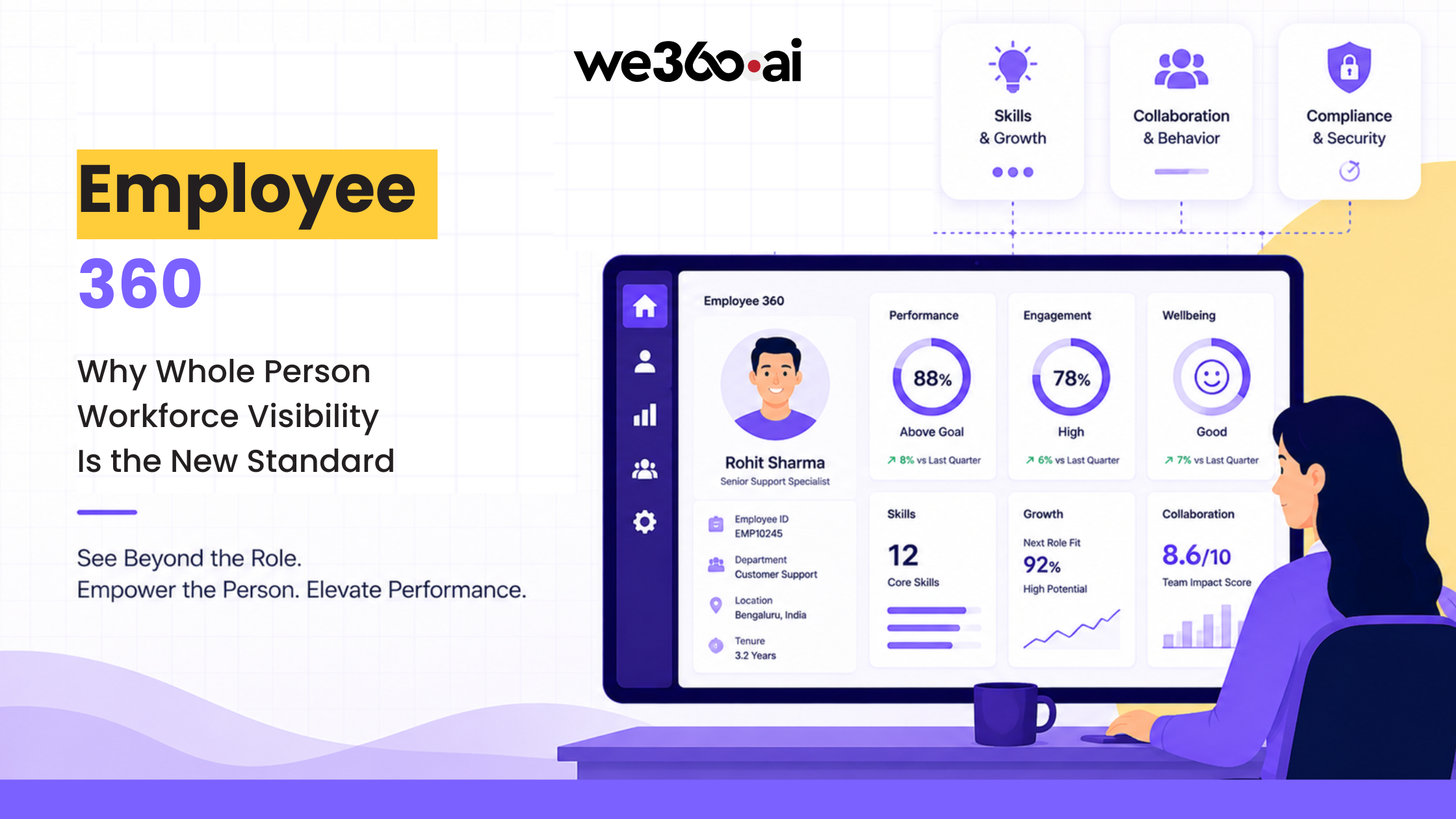
An Employee 360 brings attendance, performance, engagement, learning, and workforce data into one unified view. This 2026 guide explains how Employee 360 works, what data it includes, its benefits for HR teams, and how to implement it effectively while maintaining employee trust and data privacy.

Toxic workplaces rarely become unhealthy overnight. They develop through patterns of poor communication, favoritism, constant blame, unresolved conflict, and fear of speaking up. In this guide, discover the 10 key signs of a toxic workplace, how to spot subtle red flags like gaslighting and workplace cliques, and practical ways to address them.
Employee burnout often shows up in behavior before employees talk about it. Rising overtime, slower responses, more mistakes, reduced participation, and withdrawal can all be early warning signs. This guide covers the key signs of employee burnout, what causes it, and how managers can spot and address burnout before it affects productivity and retention.