Choosing employee monitoring software? Use this 30-point scored framework across 6 categories core tracking, privacy, compliance, analytics, deployment, and integrations to compare vendors objectively and make a defensible decision.
Calculate employee attendance rate using the correct formula. Explore benchmarks, examples, and tips to improve attendance across your workforce
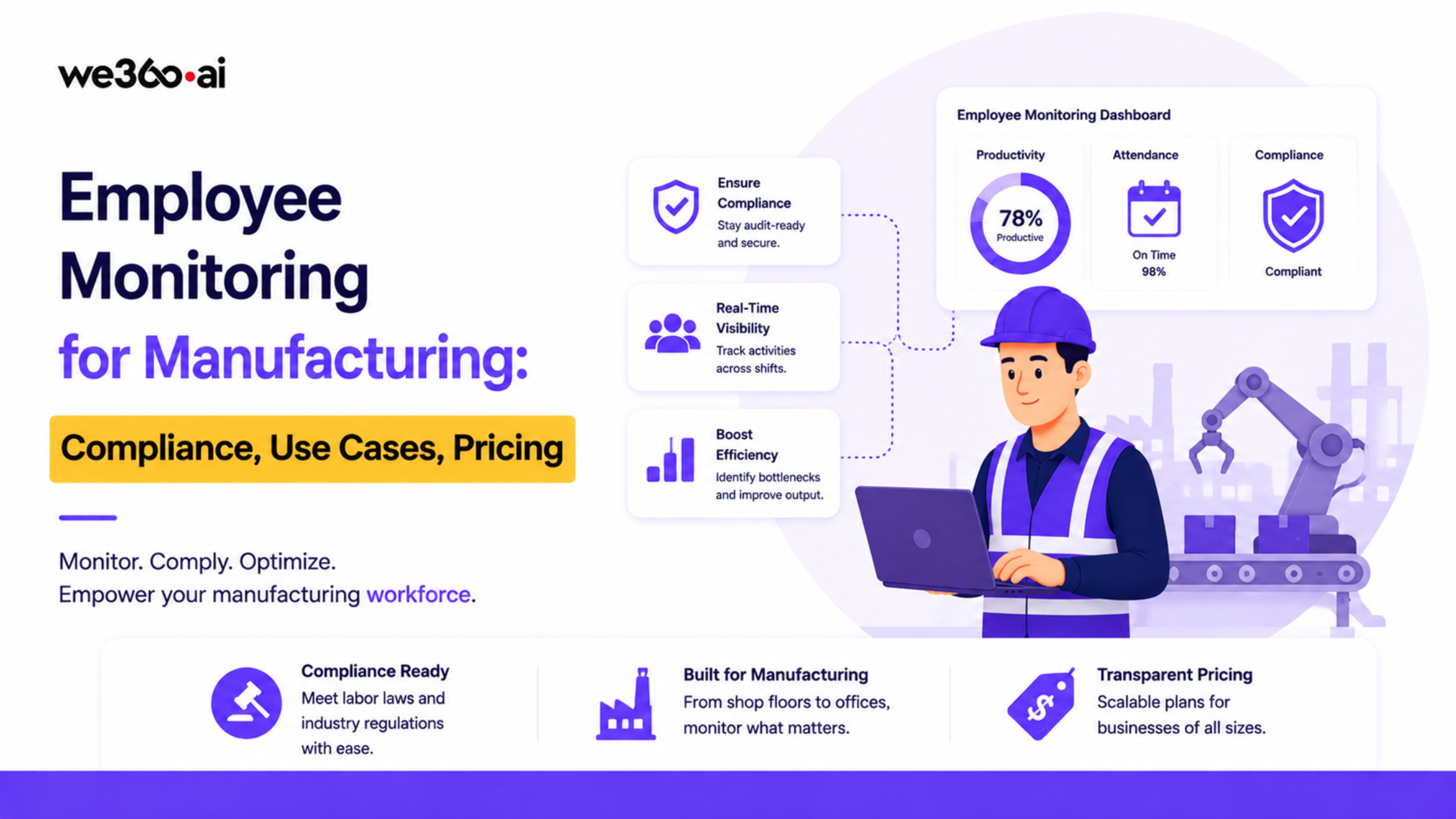
Track shift attendance, floor productivity, and safety compliance across your manufacturing workforce. Start free with We360.ai from ₹299/user/month.
.png)
Learn what an Employee 360 view is, how to build one, and why HR teams in India are using it to cut attrition and prove ROI. Read the 2026 playbook.
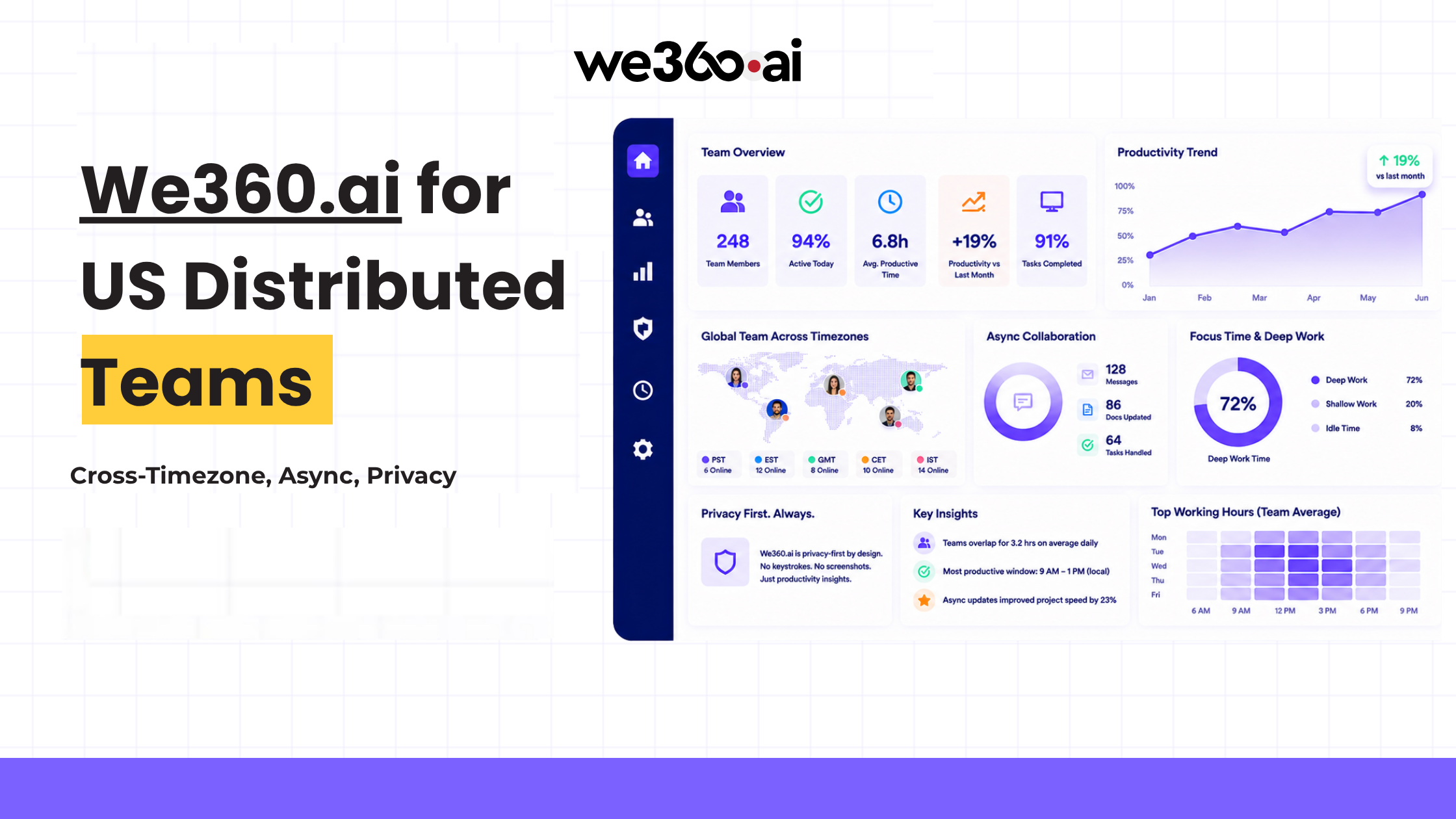
Legal, ethical, and practical guide to monitoring distributed US teams. Cross-timezone tracking, async workflows, privacy compliance. Start free with We360.ai.
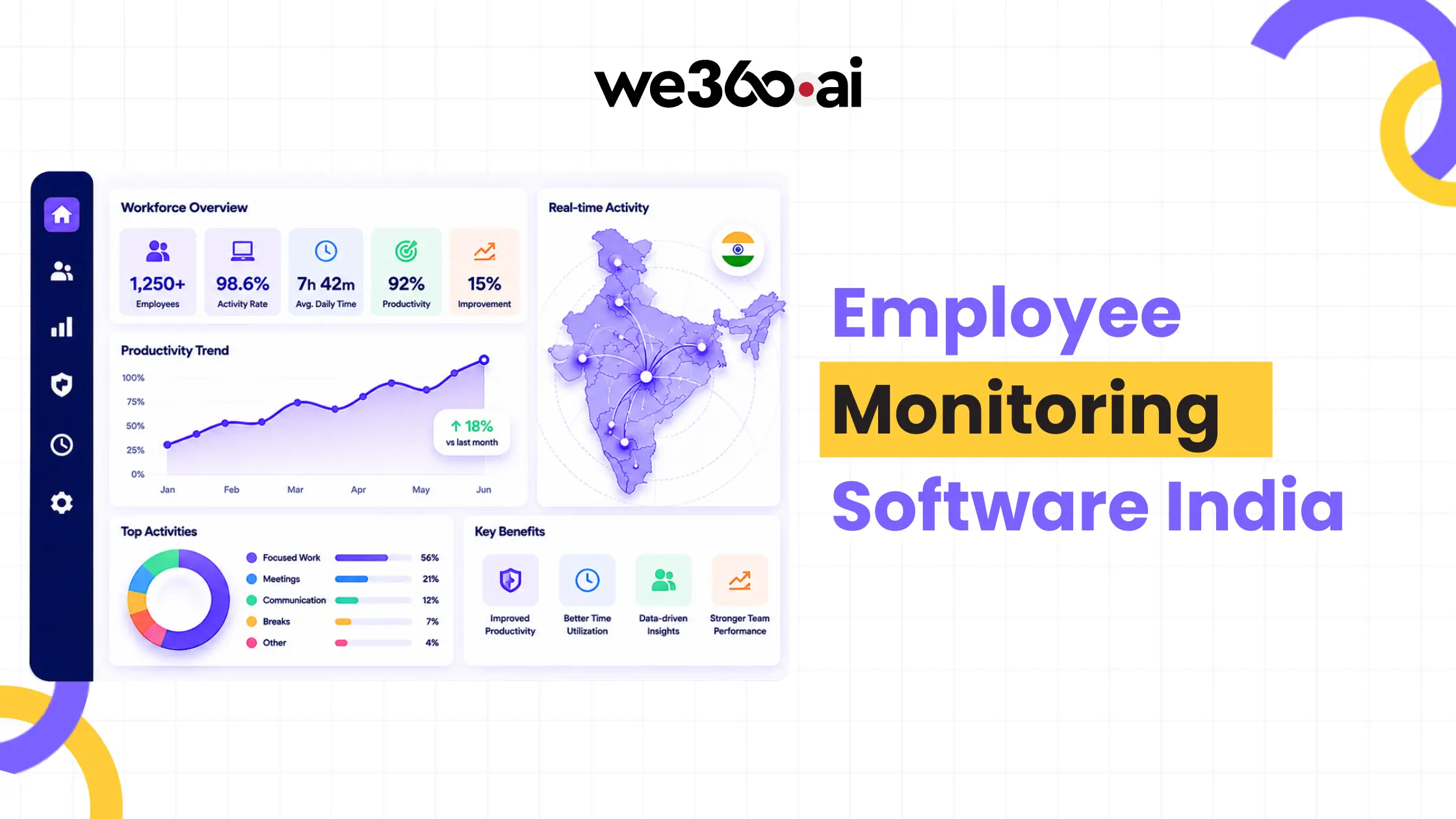
We360.ai replaces guesswork with a single source of truth for workforce activity. Operations and HR leaders get real-time visibility into attendance, applications, websites, and field locations without playing detective. The platform is built India-first, with consent prompts, role-based access, and audit logs that map cleanly to local regulations.
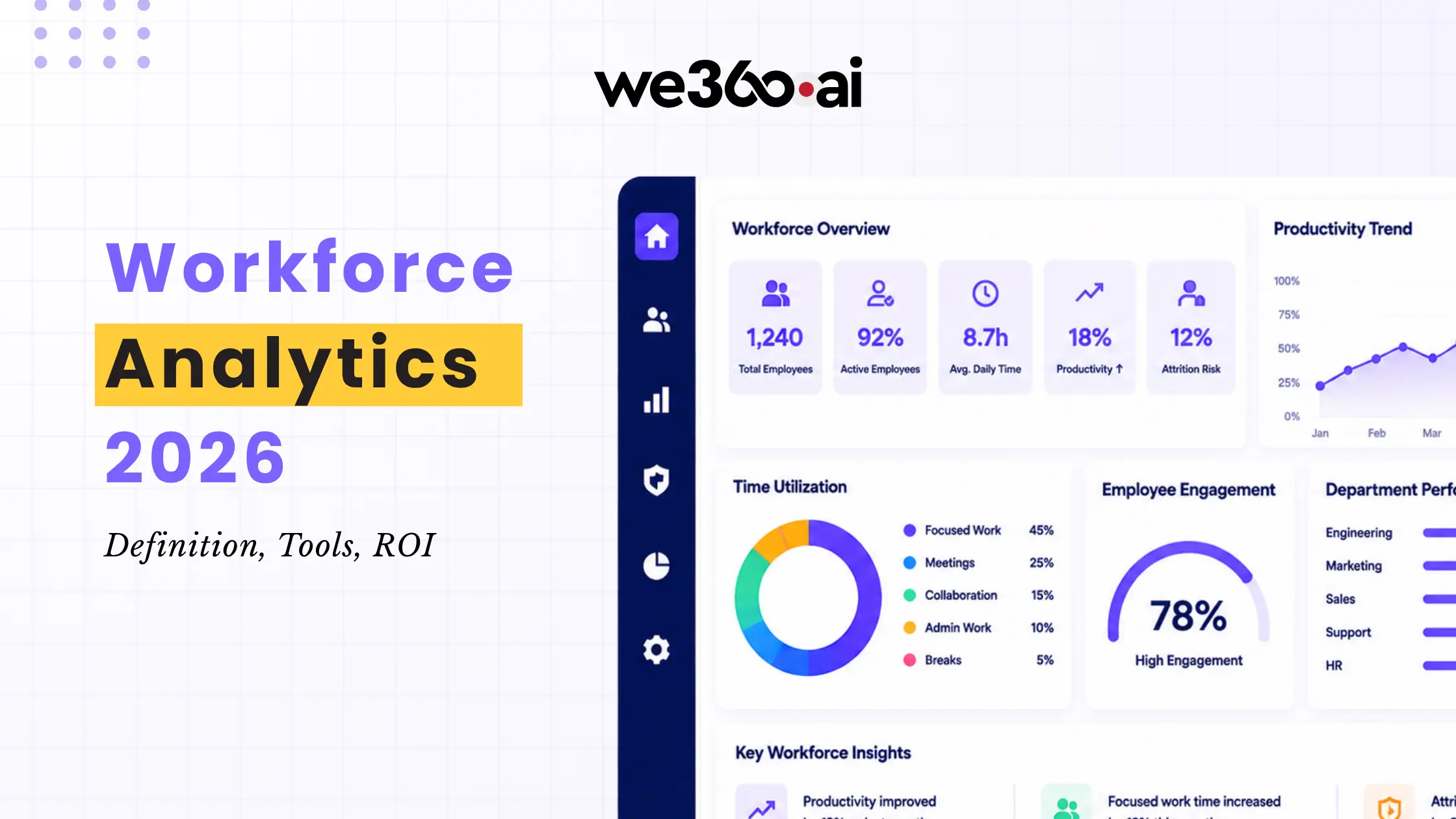
Most workforce data inside Indian and APAC enterprises is still trapped in HRIS exports, biometric logs and scattered SaaS tools. The leaders who will outperform in 2026 are the ones who turn that exhaust into a daily decision feed, and this article is the playbook for getting there.
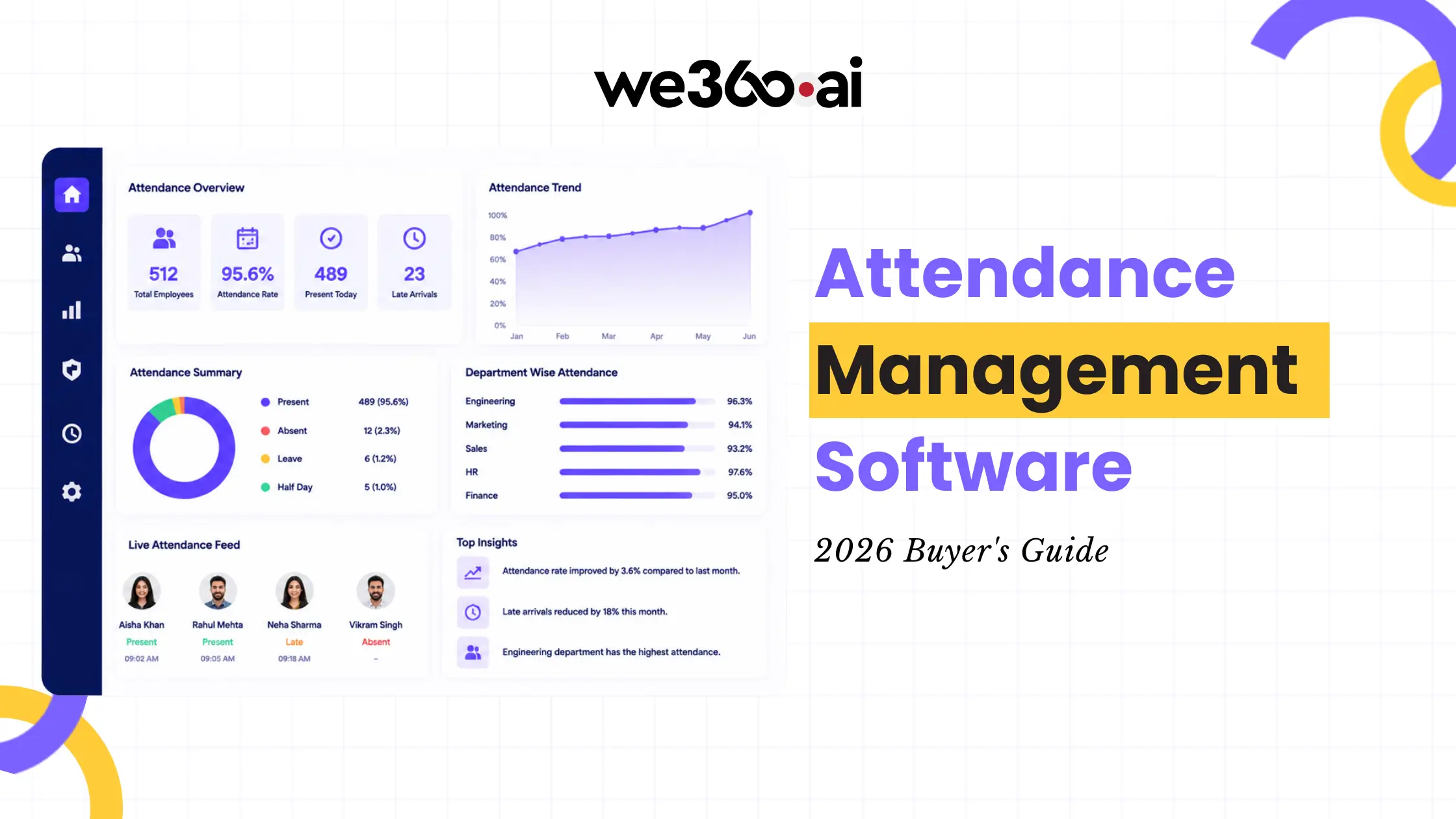
Attendance management software is no longer a back-office utility. It is the data spine of modern workforce operations. The right system pays for itself inside one quarter through payroll accuracy, HR productivity, and compliance confidence. The wrong system, or worse, no system at all, quietly leaks lakhs every year.
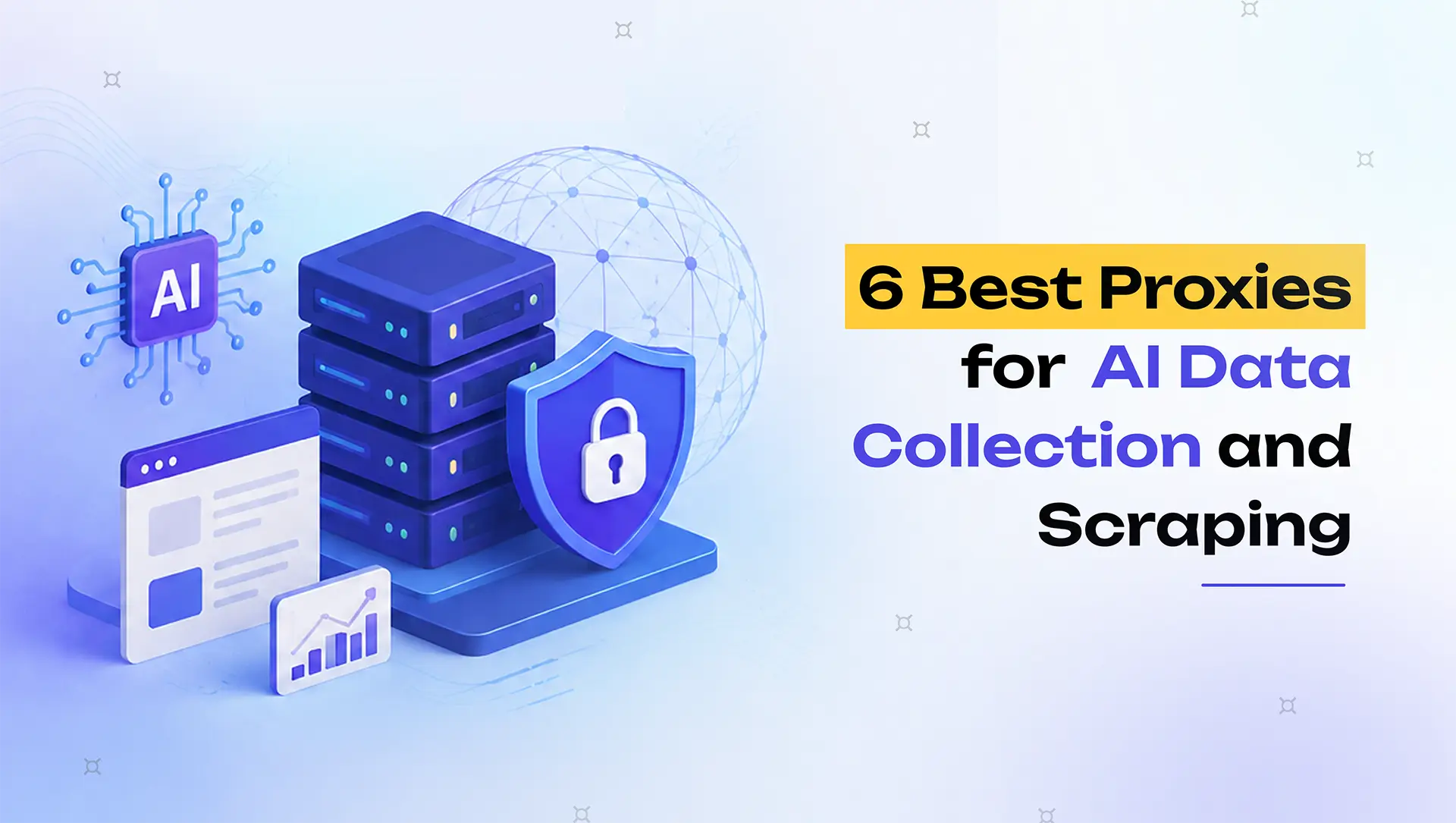
AI data collection now depends on infrastructure that can support stable scraping, controlled routing, and recurring automation across multiple targets. AI systems continuously collect product data, search results, reviews, social media signals, and public web content, which makes request distribution and session stability critical for long-running workflows.
Productivity%20Without%20Big%20Brother.webp)
Most companies in 2026 are already using AI somewhere in their hiring pipeline, their customer support queue, or their project management software. What fewer companies have figured out is how to use it well, in ways that actually improve working life rather than just adding surveillance overhead.
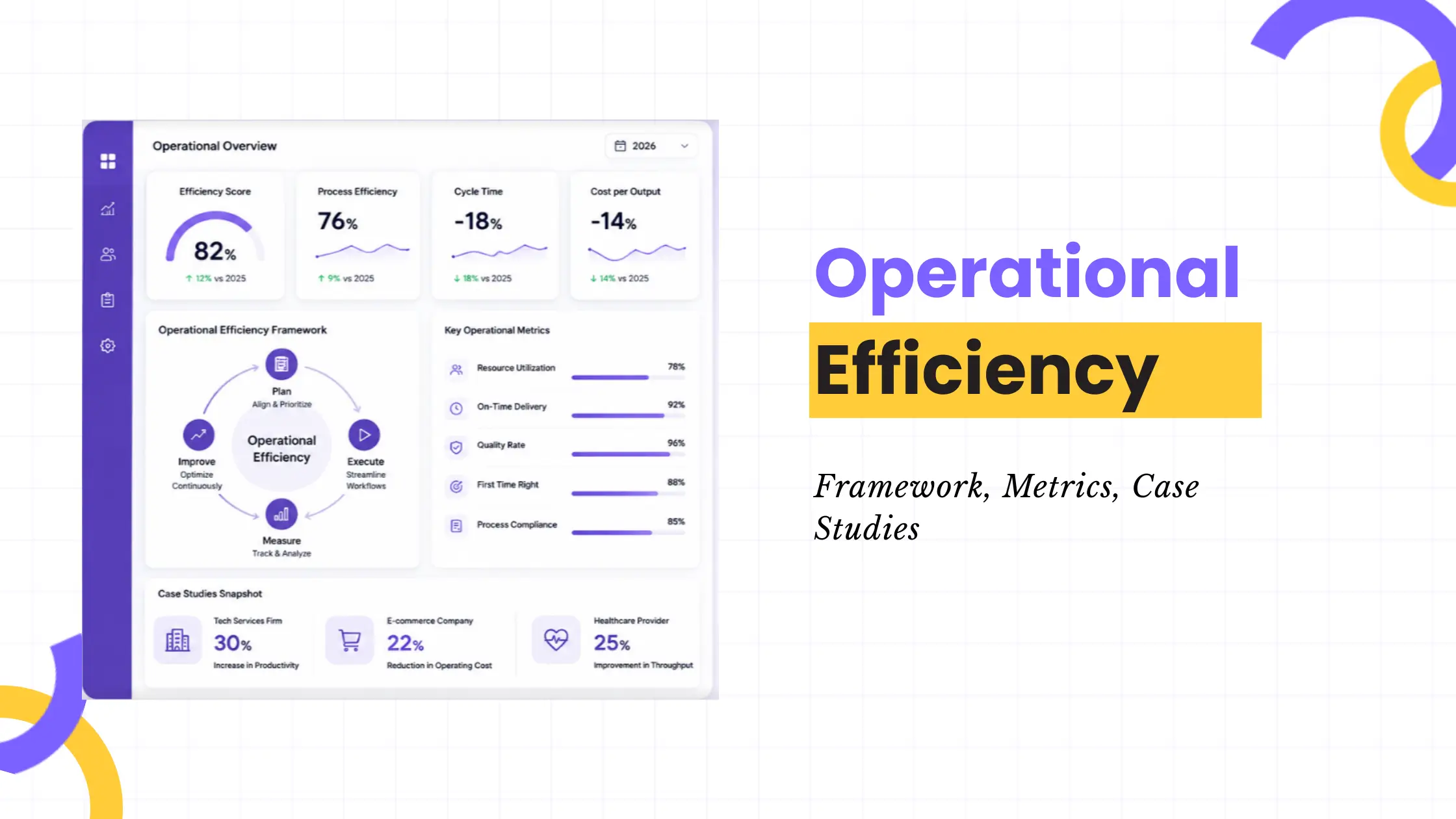
Operational efficiency in 2026 is a measurement discipline. The companies with the best operational performance aren't the ones that cut the most, they're the ones that can see their processes clearly enough to know what to fix, in what order, and with what resources.
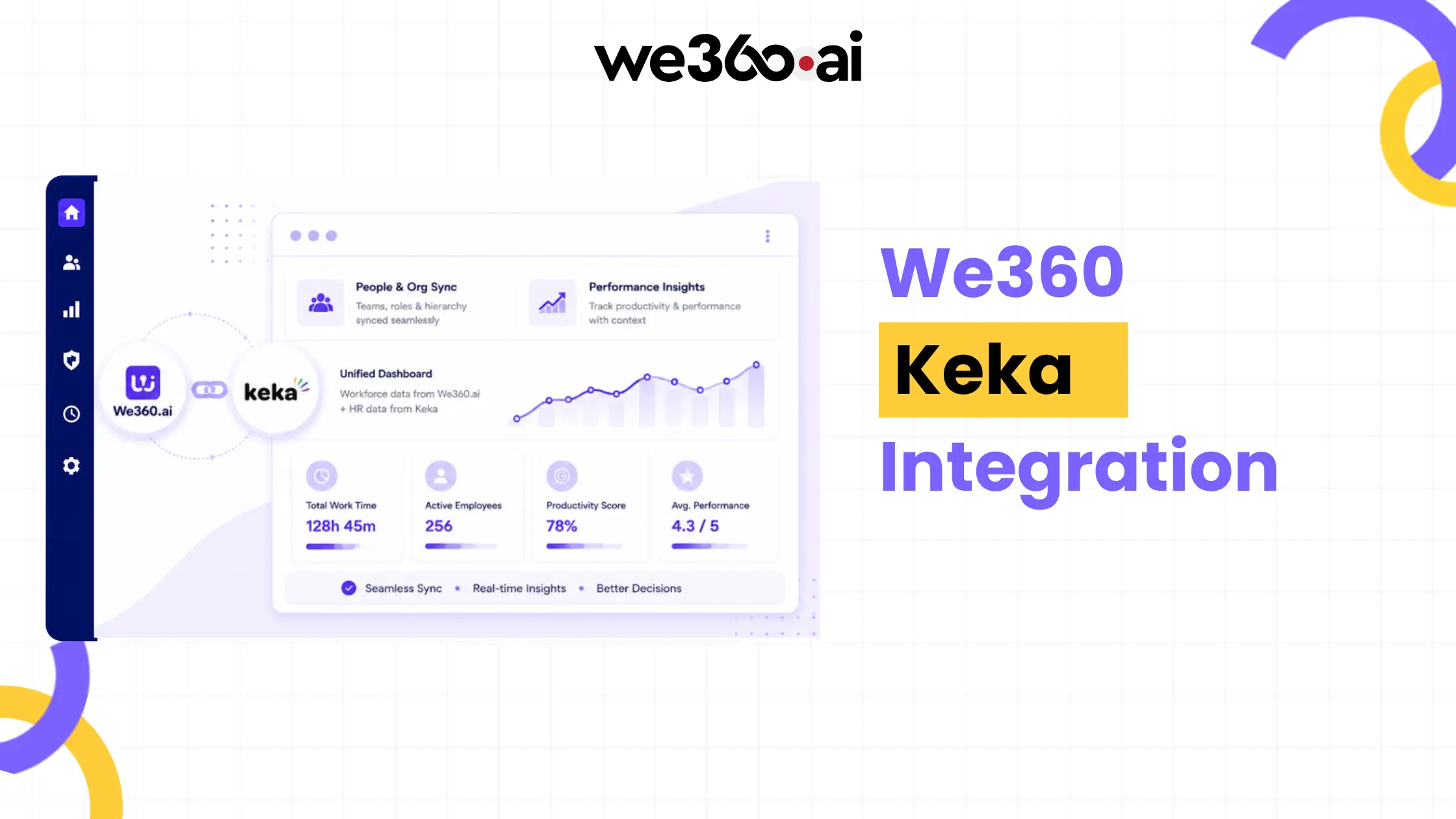
Keka handles payroll, leave, and employee records well. What it doesn't do is tell you what happened with working time after the shift started. That gap creates manual work that stacks up fast.
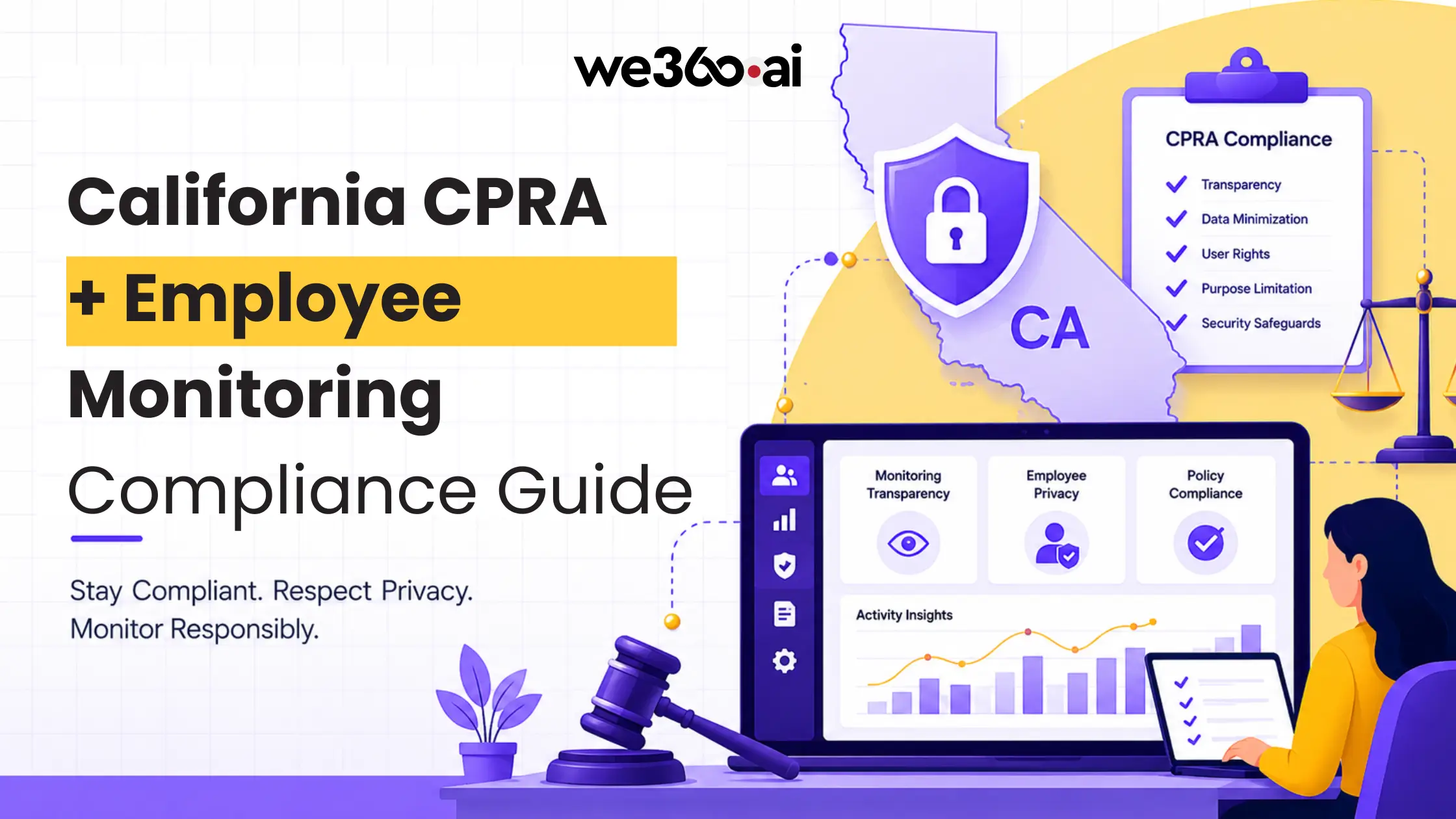
California employers have always operated under stricter workplace rules than most states. CPRA turned that up. Since January 1, 2023, the exemption that kept employee data outside CCPA's scope expired and now every piece of data your monitoring tools collect is potentially subject to access requests, deletion demands, and mandatory disclosures.

We360.ai's workforce analytics platform sits alongside Jira rather than replacing it. When connected, active time from We360.ai maps to open Jira issues automatically. You see actual working time per ticket, per sprint, per person pulled from real activity data, not self-reported logs.
.png)
Project work in 2026 looks nothing like project work even five years ago. Teams are distributed, scopes shift weekly, billing models are mixed, and leaders need real-time visibility without chasing status updates across Slack, spreadsheets and three different tools. This article explains how We360.ai’s Project Management m