
Imagine this: your competitor lost its star performer to a competitor again, leading to $10,000 in rehiring initiatives and lost productivity.
In modern startups where each team member drives hypergrowth, cash burn is a silent killer. It goes beyond spreadsheets and gut instincts, where dashboards show the real insight and not just assumptions. This slashes turnover by up to 20%, optimizing revenue per employee and turning HR into a profit center.
As per statistics:
- The global workforce analytics market hit $2.14B in 2023 and is projected to reach $5.53B by 2030 at 15.3% CAGR—startups fuel a 17.8% SME adoption surge via affordable SaaS.
- Businesses gain a $13.01 return per $1 invested in workforce planning analytics via optimized staffing and reduced inefficiencies.
- Credit Suisse saved $70M/year by predicting quits; bad hires cost 30% of salary, and analytics minimizes these.
While we talk about how workforce analytics helps startups, let’s gain an insight into what it is.
What is workforce analytics in a start-up context?
Start-ups use workforce analytics to turn limited employee data into actionable insights. This helps make informed decisions for faster growth. It helps hold a competitive edge over larger organizations by focusing on talent efficiency from earlier stages.
Why do start-ups need workforce analytics?
Start-ups need workforce analytics to turn their biggest asset, i.e., people, into a growth engine.
- Surveys show that over 70% of organizations globally use some form of workforce analytics to improve decision-making and cut costs.
- Startups lose 20-30% of staff annually due to poor fits or burnout, draining cash on rehiring (often 1.5-2x salary per role).
Understanding workforce metrics in analytics
Workforce metrics is the compass that guides a startup through scaling and development. It offers a clear view of the current state of the workforce, such as productivity levels, engagement rates, and talent acquisition efficiency.
These parameters allow start-ups to capitalize on the strengths, address weaknesses, and ensure the growth trajectory is scalable.
In an HR context, workforce metrics measure turnover rate, time-to-hire, and employee satisfaction scores. For instance, a low turnover with a high employee satisfaction score indicates a positive work culture, which is important for attracting top talent.
Here are some in-depth insights into some workforce metrics for start-ups:
- Employee turnover rate: It is the rate at which employees leave the organization. A high rate indicates poor management and fewer growth opportunities.
- Time-to-hire: It is the average time taken to fill a position. A short time to hire implies a seasoned management approach, while a longer schedule means the necessity to streamline hiring practices.
- Employee satisfaction score: This score implies how satisfied employees are with their jobs. High scores can lead to increased productivity and better customer service.
- Cost per hire: This is the expense associated with hiring an employee. Keeping this cost reasonable is crucial for startups that have limited resources.
- Training and development ROI: This is the financial return from investing in an employee’s training.
Startups can establish a strong analytics-driven culture that not only loves data but also converts it into useful insights. These metrics can be transformed into a startup's operational structure.
Utilizing analytics in talent acquisition
Insights from different perspectives:
- From HR's point of view : HR professionals leverage predictive analytics for identifying hiring needs. They assess traits of high-performing employees. For instance, you may evaluate colleges that produce employees who surpass their performance.
- From employees’ perspective : It evaluates how data-driven processes shape employee performance, revealing opportunities and frustrations. Clunky processes, like lengthy assessments causing drop-offs, signal poor design and deter top talent.
- From business strategy perspective : Startups can identify skill gaps and future industry trends to proactively recruit for emerging trends.
- From financial perspective : Startups can evaluate the cost per hire and return on investment of new recruits to make more effective use of their resources. The ROI of investing in an employee referral program may be higher than that of using standard recruitment firms, according to an analysis.
Key features table for workforce analytics in startups
How does we360.ai scale startups' growth?
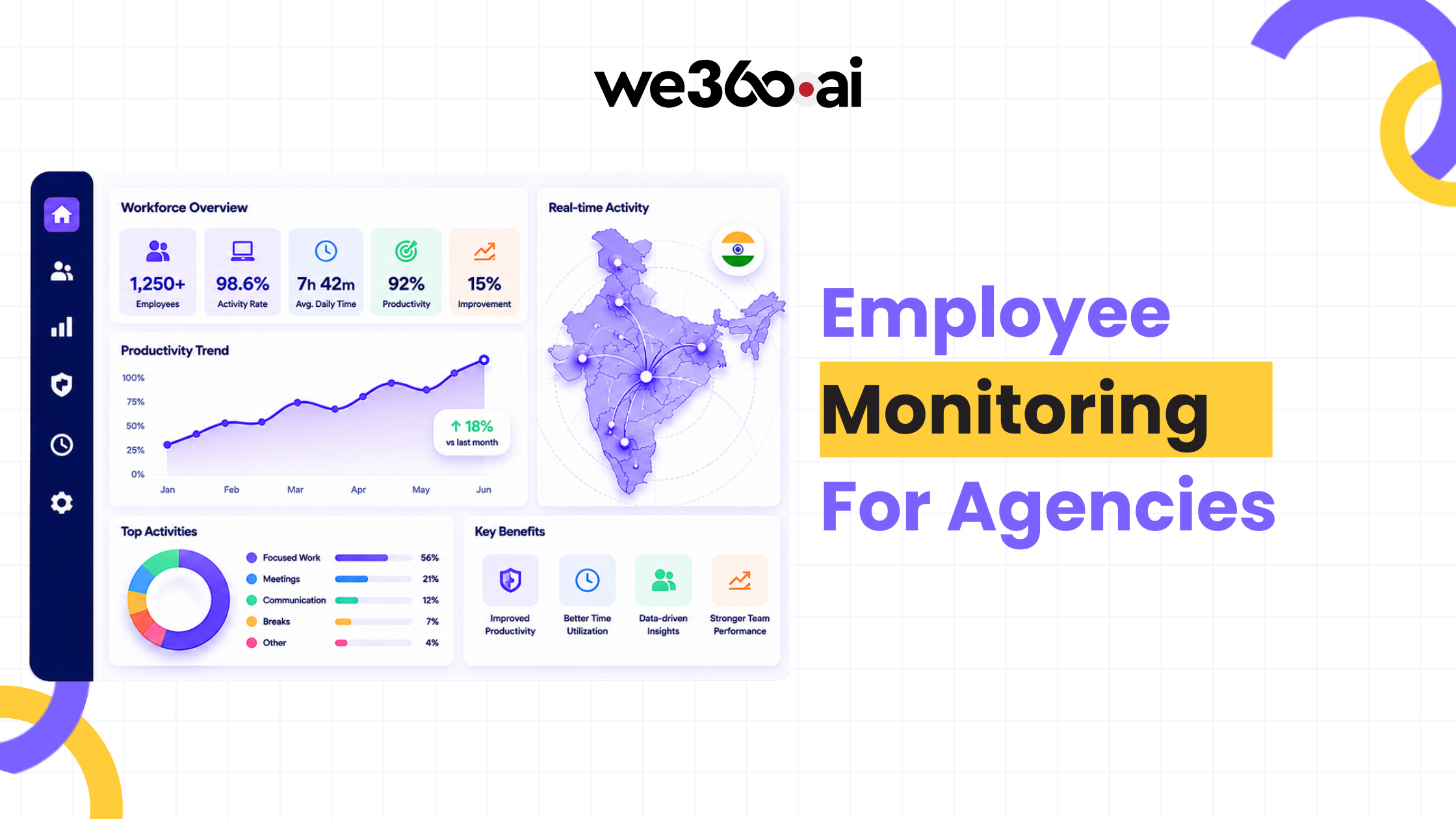
We360.ai is a workforce analytics and employee monitoring application that serves startups, tracking hours and evaluating how employees spend their time. Without being ineffective, find out exactly which websites and apps they are utilizing. In the end, this helps managers make wise choices.
With a 99.99% uptime SLA, the platform serves more than 20,000 users and 5,500 businesses. It uses TLS/SSL protocols and AES-256 encryption to safeguard data and conforms with SOC 2, GDPR, ISO, and VAPT requirements. Windows 7 or later, the majority of Linux versions, and macOS 10.11 and higher can all run the program dependably.
If you are a startup scaling nimbly, we360.ai is just what you need. Book a FREE DEMO to unravel how the tool does wonders for you.