
In today’s dynamic work environment, the conversation around employee monitoring has never been more prevalent. As organizations navigate hybrid models, distributed teams, and the increasing demand for data-driven insights, the line between oversight and overreach can feel blurry. For leaders, the challenge isn't just about measuring productivity; it's about doing so in a way that fosters trust, respects privacy, and ultimately empowers employees, rather than alienating them. How do you leverage the power of workforce analytics to boost output without compromising the very culture you're striving to build?
This blog post will delve into the principles of ethical employee monitoring in 2026. We'll explore how to implement solutions that provide valuable insights for strategic decision-making while prioritizing transparency, fairness, and employee well-being. You'll learn how to transform monitoring from a perceived threat into a tool for mutual growth, ensuring your organization thrives on both productivity and trust.
The Evolving Landscape of Employee Monitoring: Beyond Surveillance
The term
"employee monitoring" often conjures images of surveillance and micromanagement. However, the modern approach to workforce analytics has evolved far beyond this outdated perception. In 2026, ethical monitoring is not about watching every keystroke; it's about understanding work patterns, identifying systemic inefficiencies, and creating a more supportive and productive work environment for everyone.
1. The Shift from Individual Tracking to Aggregate Insights
The cornerstone of ethical monitoring is the focus on aggregate, anonymized data rather than individual surveillance. Instead of scrutinizing the minute-by-minute activities of a single employee, the goal is to understand team-level and organization-wide trends. This means looking at:
- Application Usage Patterns: Which tools are being used most effectively? Are there underutilized software licenses that could be re-evaluated?
- Workflow Efficiency: How long do certain types of projects typically take? Where are the common bottlenecks that slow down progress?
- Collaboration Dynamics: How are teams interacting? Are there communication silos that need to be addressed?
By focusing on these macro-level insights, leaders can make strategic decisions that benefit the entire organization without infringing on individual privacy.
2. The Importance of Transparency and Communication
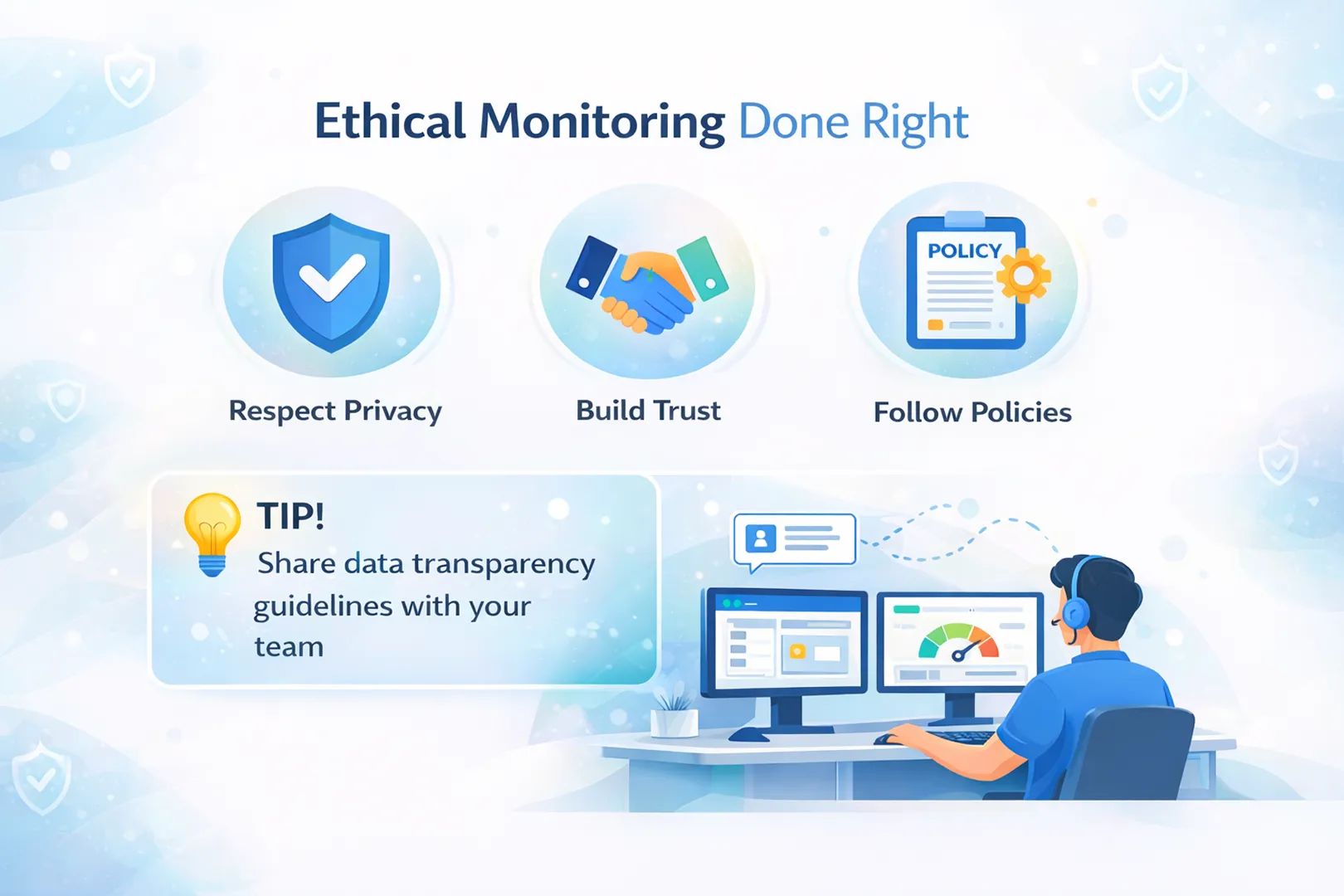
One of the biggest mistakes an organization can make is implementing a monitoring solution in secret. Transparency is non-negotiable. Employees have a right to know what data is being collected, why it's being collected, and how it will be used. A clear and open communication strategy should be a prerequisite for any workforce analytics initiative. This includes:
- A Clear Policy: Develop a formal policy that outlines the scope and purpose of your monitoring activities.
- Open Dialogue: Create opportunities for employees to ask questions and provide feedback.
- Sharing Insights: When appropriate, share high-level, anonymized insights with your teams to demonstrate how the data is being used to improve processes and support their work.
When employees understand that the goal is to make their work lives better, they are far more likely to embrace the initiative.
3. The Focus on Empowerment, Not Enforcement
Ethical monitoring is a tool for empowerment, not enforcement. The data should be used to identify opportunities for growth, support employee well-being, and create a more efficient and enjoyable work environment. This means using the insights to:
- Identify Training Needs: If data shows that a team is struggling with a particular tool or process, it's an opportunity to provide targeted training.
- Prevent Burnout: By identifying employees who are consistently working long hours or showing signs of disengagement, you can intervene with support before they burn out.
- Recognize High-Performers: Objective data can help you identify and reward your most productive and engaged employees, based on their actual contributions.
When implemented thoughtfully, workforce analytics can be a powerful tool for building a culture of trust and mutual respect.
Conclusion: A New Era of Trust and Transparency
In 2026, the conversation around employee monitoring is no longer about whether to do it, but how to do it right. By embracing a framework of transparency, focusing on aggregate insights, and using data to empower employees, organizations can unlock the immense potential of workforce analytics without sacrificing trust. The future of work is not about more oversight, but more insight—and that's a future that benefits everyone.


.png)