




Summarize With AI


If you think a quiet employee is a loyal one, that's not always right. Signs of disengaged employees show up differently depending on the person: some go quiet and do the bare minimum, others get vocal and start pulling the team down with them. We've pulled together every pattern our own customers report seeing, cross-checked against Gallup's engagement research, so you can tell which kind you're dealing with and what to do about it.
What is a disengaged employee?
A disengaged employee has stopped investing emotionally in their work. They've lost the discretionary effort that used to show up in their output, feel disconnected from the company's goals, and often carry frustration that spreads to people around them. Someone disengaged from work still needs the paycheck, so they stay, just without the effort they used to bring. That's different from a poor performer, who's usually still trying and just struggling.
What does "disengaged" mean at work? Employee disengagement meaning, in plain terms, is an employee who's withdrawn emotionally and mentally from their job. They show up physically but stop investing the extra effort, attention, or care that engaged work requires.
Some HR teams call this job disengagement, others call it disengagement at work or disengagement in the workplace. The label doesn't matter much. What matters is that it rarely announces itself on day one. It creeps in through missed enthusiasm, shorter answers in meetings, and a growing gap between what someone used to contribute and what they do now. Catching it early, before an otherwise engaged team starts feeling like a disengaged workforce, is cheaper than fixing it after someone's already checked out for good.
Signs of Disengaged Employees-Real Examples
Disengaged employee signs show up in six recognizable patterns: frequent negativity, reduced accountability, resistance to feedback, poor collaboration, withdrawal from team efforts, and spreading low morale to coworkers. Each one is worth watching on its own, since any single sign can mean something else, but two or three together are a real signal.
- Frequent negativity. A manager introduces a new workflow and the employee responds with "this won't work anyway" or "management always makes things worse," without offering an alternative.
- Reduced accountability. A project slips and the employee blames unclear instructions or another department instead of owning their part.
- Resistance to feedback. A performance conversation gets dismissed outright, with the employee arguing that "these conversations never change anything."
- Poor collaboration. A team member ignores group updates, avoids helping during crunch periods, and only participates when directly asked.
- Withdrawal from team efforts. The team hits a major target and celebrates. This person stays visibly indifferent, not even faking enthusiasm.
- Spreading low morale. After a leadership update, the employee tells coworkers privately that nothing will change and leadership can't be trusted.
The pattern that ties these together: disengaged employees don't just step back from their work. They often push back against it, and that pushback is contagious in a way quiet withdrawal isn't.
7 Habits of Highly Disengaged Employees
The seven habits that show up most often in disengaged employees are declining work quality, missed deadlines, withdrawal from team interaction, increased idle time, unplanned absenteeism, a negative attitude, and quietly ignoring company policy. These are the disengaged employee behaviors managers report most, and Gallup disengaged employees data shows they're not just annoying, they're a productivity gap: 18% less output than engaged workers on average, according to Gallup's meta-analysis of business unit performance.
- Declining work quality. More typos, rushed submissions, and a jump in rework requests from someone who used to submit clean work the first time.
- Missed deadlines. Deadlines that used to be routine start slipping, often with excuses instead of a heads-up in advance.
- Withdrawal from team interaction. Shorter replies in chat, camera off by default, and skipping the optional social events they used to show up for.
- Increased idle time. More time on non-work tabs during the day, with activity data showing longer gaps between actual output.
- Unplanned absenteeism. Sick days cluster around Mondays and Fridays, often without the kind of notice this person used to give.
- A negative attitude. Complaints about leadership or the company creep into everyday conversation, even when nobody asked.
- Ignoring company policy. Late timesheets, skipped security steps, or dress code slips from someone who used to follow the rules without thinking about it.
None of these habits alone proves someone's disengaged. A rough week can produce any of them. Three or four showing up together, and sticking around for a month or more, is the real tell.
Actively Disengaged vs. Not Engaged
"Not engaged" and "actively disengaged" are not the same problem, even though people lump engaged and disengaged employees together and use the terms interchangeably. The actively disengaged employees meaning, per Gallup, is specific: workers who are unhappy at work and act on it, not just workers who've quietly checked out. Not engaged employees do the minimum required and stay quiet about it. Actively disengaged employees let everyone around them know it, which makes them a bigger risk to team morale even though there are usually fewer of them.
Gallup's own numbers show the split clearly. As of 2022, 32% of US workers were engaged, 50% were not engaged (what most people mean by "quiet quitters"), and 18% were actively disengaged, according to Gallup's engagement indicator data. That put the ratio of engaged to actively disengaged workers at 1.8 to 1, the lowest Gallup had recorded in nearly a decade. By 2024, actively disengaged workers had climbed to 17% of the global workforce even as overall engagement kept sliding, per Gallup's 2026 State of the Global Workplace report.
Here's the practical difference for a manager. A not engaged employee is a coaching problem: clarify expectations, reconnect them to purpose, give them a reason to care again. An actively disengaged employee is closer to a containment problem: their frustration spreads to teammates faster than most managers realize, so the fix usually starts with a direct conversation about what's actually wrong, not a generic pep talk.
Stages of Disengagement
Signs of disengagement rarely happen overnight. In our experience working with HR teams tracking this, it moves through four rough stages: full engagement, quiet withdrawal, visible frustration, and active resistance. Not every employee passes through all four, and some skip straight to stage three after one bad experience, but the pattern holds often enough to be useful.
- Engaged. The employee volunteers ideas, follows through without reminders, and reacts to wins and losses like they matter.
- Quiet withdrawal (not engaged). Enthusiasm fades first. The person still does the job, just without the extra effort or curiosity they used to bring.
- Visible frustration. Complaints start surfacing, feedback gets brushed off, and small annoyances turn into bigger ones in conversation.
- Active resistance (actively disengaged). The employee openly criticizes decisions, avoids accountability, and influences coworkers toward the same cynicism.
The earlier you catch someone in stage two, the cheaper the fix. By stage four, you're usually managing an exit, not a recovery.
Signs an Employee Is "Checked Out"
An employee who's "checked out" is doing just enough to avoid getting flagged, without any of the initiative or care that used to show up in their work. This looks less dramatic than active disengagement and more like quiet resignation: someone feeling disengaged at work who's mentally clocked out while still clocking in physically. It's common among disengaged staff who've never had a bad performance review, which is exactly why it slides under the radar.
Only 27% of US workers strongly agree their supervisor keeps them updated on what's happening in the organization, and that disconnect is often where "checked out" behavior starts, according to Gallup's research on manager communication. Watch for these patterns specifically:
- Sticking rigidly to start and end times, with zero flexibility on deadlines they'd have stretched for a year ago.
- Barely speaking up in meetings, especially in hybrid or remote settings where silence is easy to hide behind.
- Almost no unprompted contact with their manager, since there's nothing left they feel like sharing.
- Doing exactly what's asked and nothing else, with no visible interest in how the work connects to anything bigger.
This is the group easiest to miss, because "checked out" employees rarely cause problems. They just quietly stop being an asset, which is exactly why workforce data matters more here than manager instinct alone.
What causes employee disengagement?
Worker disengagement usually traces back to one of five root causes: burnout, lack of recognition, poor management, a toxic culture, or a mismatch between the role and the person doing it. Most disengaged employees you'll manage fit cleanly into one of these five, which makes the fix more targeted than generic "boost morale" advice.
Burnout tops the list. Heavy workload and long hours wear people down until cynicism replaces the enthusiasm they started with, and 41% of employees report experiencing a lot of stress at work, per Gallup's State of the Global Workplace. Poor management is close behind, and a single disengaged manager can do more damage than a bad policy: managers account for 70% of the variance in team engagement, so one weak manager can quietly disengage an entire team regardless of what HR rolls out company-wide.
Lack of recognition and stalled growth pull in the same direction. When people stop seeing a path forward, they stop putting in the effort that used to earn them one. A toxic culture (favoritism, gossip, values that get preached but not practiced) accelerates all of it, and role misalignment, someone overqualified and bored or underqualified and overwhelmed, adds a fifth path to the same outcome.
What does disengagement actually cost your business?
The cost of disengaged employees isn't just a morale problem. It's a line item. Top-quartile engaged business units post 23% higher profitability and 18% higher productivity than bottom-quartile units, and see up to 43% lower turnover in low-turnover industries, according to Gallup's meta-analysis of business outcomes.
The turnover math alone should get budget attention. Replacing an employee typically costs 50% to 200% of their annual salary once you count recruiting, onboarding, and lost productivity during the gap, and the total cost of disengagement to US businesses runs roughly $1 trillion a year in voluntary turnover alone, per Gallup's research on the cost of employee turnover.
The operational side is just as real. The same Gallup meta-analysis found top-quartile engaged units see 81% lower absenteeism, 64% fewer safety incidents, and 28% less shrinkage (theft) than bottom-quartile units. That's not soft data. It shows up directly on an operations budget, not just an engagement survey score.
If turnover is already a pain point, our guide on reducing employee attrition goes deeper into the retention side specifically.
How do you detect disengagement early with workforce data?
You detect disengagement early by tracking behavioral trends, not just running an annual survey. Activity patterns, meeting participation, and idle time all shift before someone says a word about how they're feeling, which gives you a window to act while the person is still reachable.
A few data signals catch disengagement long before a resignation letter does:
- Productivity trend drops. A sudden or gradual dip in output compared to someone's own baseline, not just compared to the team average.
- Idle time increases. More non-work activity during work hours, especially from someone who used to run lean on downtime.
- Attendance rigidity. Strict clock-in, clock-out behavior with no flexibility, a common quiet-quitting marker.
- Collaboration decline. Fewer messages, less participation in shared docs, and a drop in tool usage that used to be routine.
We360.ai's workforce analytics platform tracks all four of these against an employee's own baseline, not a generic team average, and flags the shift before a manager would normally notice it in a one-on-one. That's the genuine gap most recognition and engagement programs miss: they're built around nominations and gut feel, and never cross-reference against the productivity data most companies are already collecting. For the fuller picture on where recognition fits into fixing this, our piece on recognition vs recognization covers how a real recognition program complements this data.
How do you re-engage a disengaged employee?
Managing disengaged employees and actually motivating disengaged employees back to full output starts with a direct, judgment-free conversation about what changed, followed by action on what you actually hear. Skipping straight to a generic pep talk or a company-wide perk rarely works when dealing with disengaged employees, since the cause is almost always specific to that person's situation.
- Have the one-on-one first. Ask directly what's changed, and listen without getting defensive about what comes back.
- Act on what you hear. If workload is the issue, redistribute it. If it's recognition, start giving specific, timely credit instead of generic praise.
- Fix the workload math. Audit what's actually on their plate, cut the non-essential parts, and protect real focus time.
- Build a growth path. A stretch project or a clear next step matters more than a bonus for someone who feels stuck.
- Address the culture issue if there is one. If burnout or toxicity are systemic, one good conversation with one employee won't fix it. Our guide on 8 early warning signs of employee burnout covers what to watch for at the team level.
The window for recovery is real, but it's not permanent. The earlier you catch someone in stage two of disengagement rather than stage four, the better your odds of getting them back.
Ready to see this working on your own team? Start Free Trial and get visibility into productivity trends, idle time, and collaboration patterns within 15 minutes of setup, no credit card required. If you'd rather see it on a live call first, book a demo with our team.
Related Posts
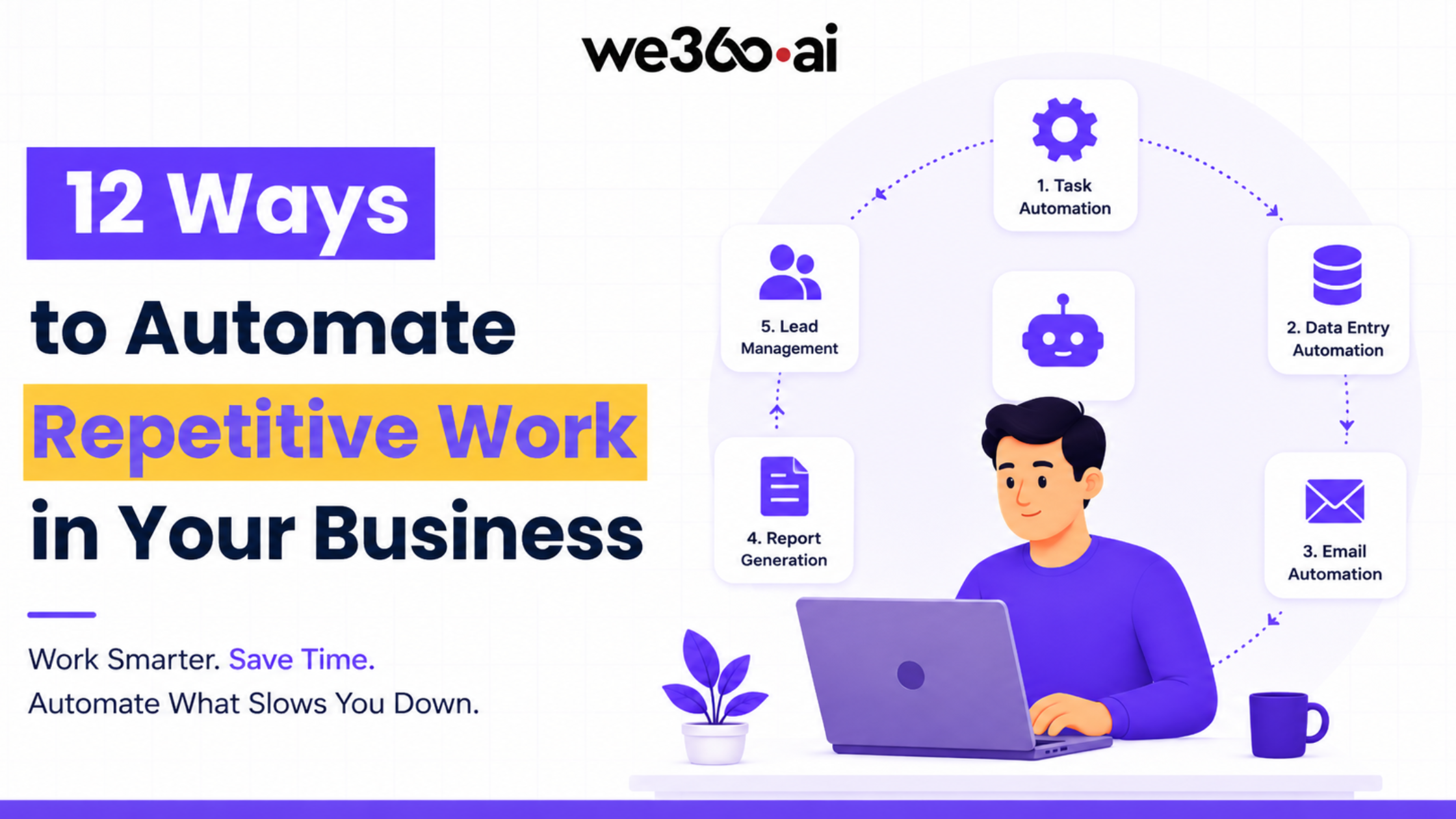
Learn how to automate repetitive work, save time, reduce errors, and help your team focus on higher-value tasks. Explore 12 practical ways to automate everyday business processes.

Discover the common causes of low productivity and practical ways to fix them. Learn how poor time management, unclear goals, distractions, burnout, ineffective communication, workload issues, and outdated processes affect performance. Explore actionable strategies businesses and employees can use to improve focus, efficiency, engagement, and overall workplace productivity without creating unnecessary pressure.
Explore the best employee productivity report templates for 2026 and learn how to track tasks, focus, performance, and outcomes to improve team productivity.
Learn how different working styles influence communication, collaboration, productivity, and team performance. Discover how to identify individual work preferences, manage diverse personalities, improve teamwork, reduce workplace friction, and create an inclusive environment. Explore practical strategies for managers to support a mixed team and help every employee work effectively.