
Attrition isn’t slowing down — it’s accelerating. Half of hiring managers now expect turnover to increase in 2026, up from 39% in 2024 and 33% in 2023, and that number climbs to 64% among large companies with 500 or more employees. The cost side of the equation has gotten worse too: the average cost of replacing an employee has jumped from $36,723 to $45,236 in a single year, an increase of nearly $10,000 per departure.
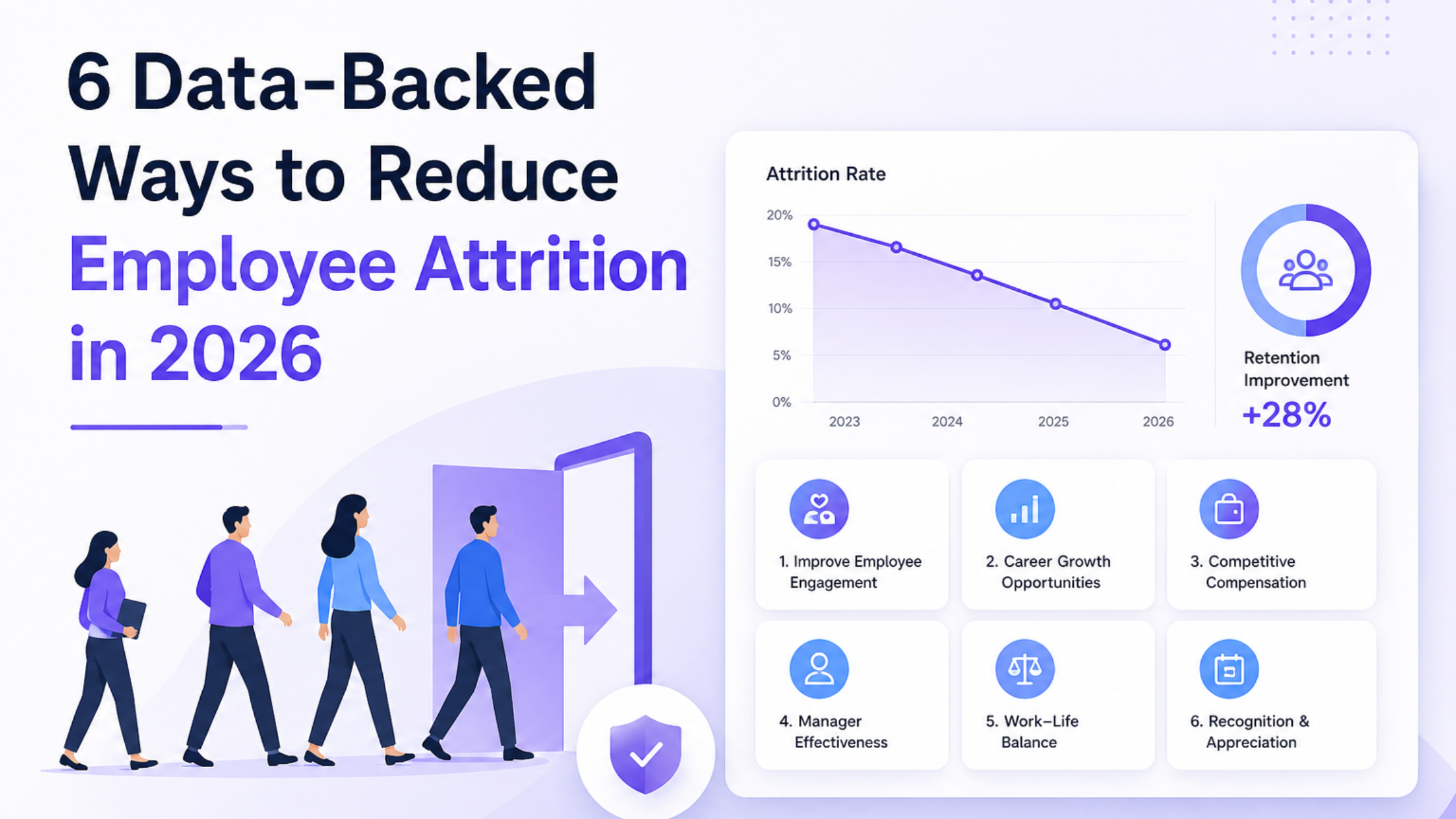
The good news is that the drivers of attrition are increasingly well understood, and several are directly addressable with the right combination of policy, management practice, and data. Here are six strategies grounded in what’s actually causing people to leave in 2026 — not generic retention advice, but responses mapped to the specific forces research shows are driving turnover this year.
1. Address Rising Workplace Demands Before They Compound
The single fastest-growing driver of turnover in 2026 is “increased workplace demands,” cited by 37% of respondents in recent workforce surveys — up 8 percentage points from 2024. This is the clearest sign that understaffing and scope creep, not compensation, are now a leading cause of resignations.
What to do: Audit workload distribution quarterly, not just at review time. If certain roles or teams are consistently absorbing more work than their headcount supports, that gap will surface as attrition within two to three quarters if left unaddressed. Workforce analytics that track task volume and hours against team capacity make this visible before it becomes a resignation trend.
2. Close the Career Growth Gap
Lack of career growth remains one of the most cited reasons employees leave — roughly a third of departing employees name it directly, and it’s a factor across industries, from call centers to knowledge work. It’s also one of the most fixable, because it rarely requires new budget — it requires visibility into who’s stagnating and a structured way to act on it.
What to do: Build a simple internal mobility cadence: quarterly conversations that go beyond “how’s it going” to specifically ask what skills or responsibilities someone wants next, and track whether those conversations translate into actual stretch assignments within two quarters. Employees who see growth conversations lead to real change stay; employees who have the same conversation every year without movement leave.
3. Fix the Wage Perception Gap, Not Just the Wage
There’s a real disconnect in 2026 data: 75% of employers expect to raise wages, but only 46% of employees expect the same — while planned average increases sit around 3.5%. That gap in expectation, more than the number itself, is fueling resignations, because employees who feel underinformed or underestimated about their compensation trajectory are more likely to test the market.
What to do: Transparency closes this gap faster than raises do. Share your compensation philosophy and review timeline proactively rather than letting employees assume the worst. A clearly communicated 3.5% increase lands very differently than a silent one that gets compared unfavorably to a recruiter’s cold-call number.
4. Treat Burnout as a Retention Metric, Not Just a Wellness One
Burnout and attrition are close cousins in the data: 82% of employees are estimated to be at burnout risk, and burnout-related presenteeism alone costs employers thousands of dollars per employee annually even before anyone resigns. The employees most at risk of burnout are frequently your most engaged people — the ones absorbing extra workplace demands (see #1) without pushing back.
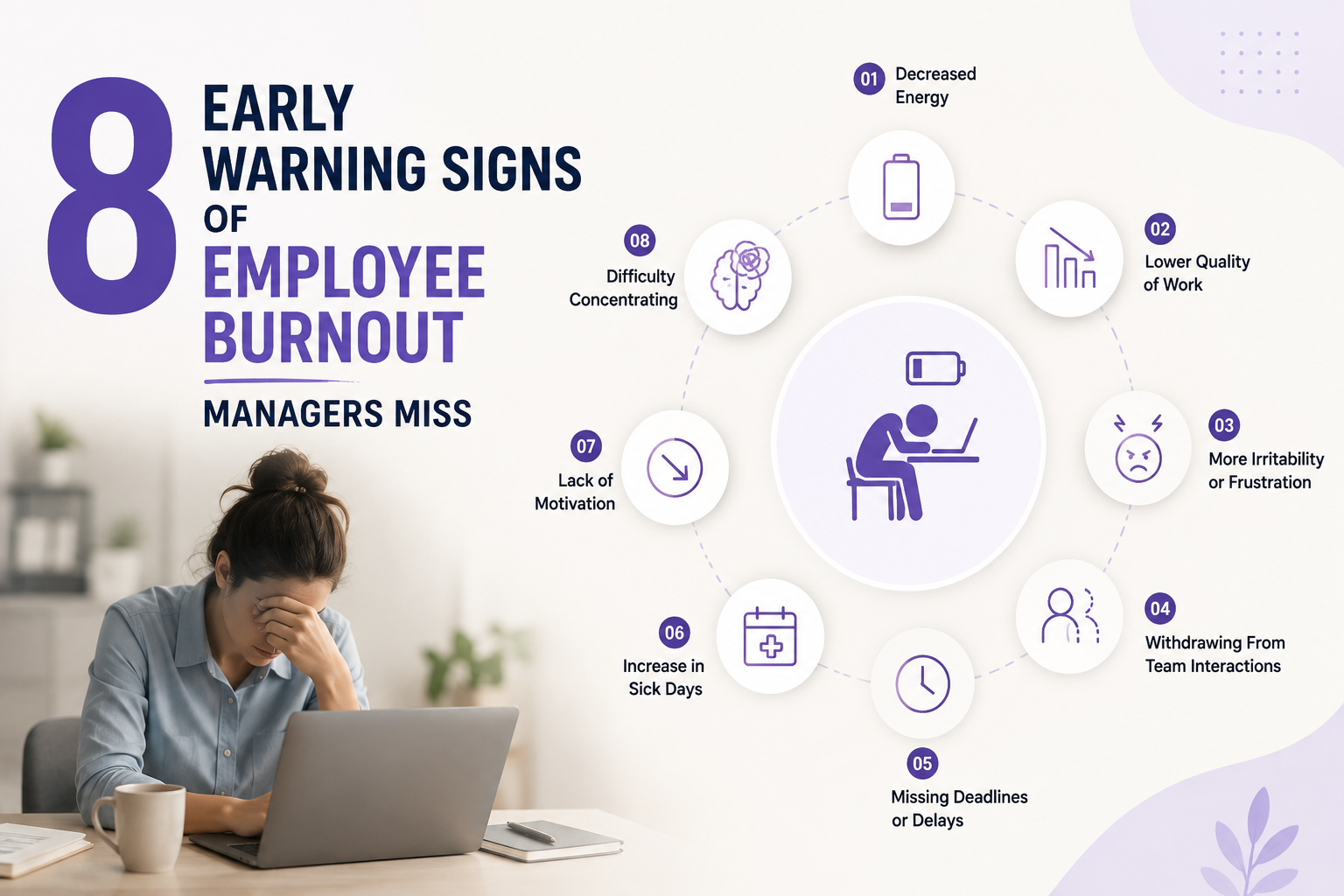
What to do: Use behavioral and activity trend data — rising hours with flat output, shrinking participation in optional interactions, increasing absenteeism — as an early warning system, not a lagging one. By the time burnout shows up in an exit interview, it’s too late to act on it.
5. Give Managers the Engagement Role They’re Supposed to Play
Manager engagement has dropped to just 27% globally, despite the fact that managers account for an estimated 70% of the variance in team engagement. This is arguably the highest-leverage lever on this list: a disengaged manager doesn’t just fail to prevent attrition, they actively accelerate it across their entire reporting line.
What to do: Invest in manager enablement specifically — not generic leadership training, but practical tools that help managers spot early attrition signals across their team without relying purely on memory and instinct. This is also where workforce analytics platforms like We360.ai add outsized value: instead of a manager trying to track workload, hours, and engagement trends across 8–15 direct reports manually, the data surfaces the outliers automatically, freeing the manager to act on judgment rather than spend their limited time gathering signal.
6. Segment Retention Strategy by Why People Actually Leave
Generic retention programs — a wellness stipend here, an all-hands recognition there — often miss the mark because attrition drivers vary by segment. “Expanding job opportunities” as a resignation driver jumped 12 points year-over-year, meaning more people are leaving because the market pulled them, not because your workplace pushed them. That’s a different problem than workload-driven attrition, and it needs a different response — competitive positioning and internal mobility, not workload rebalancing.
What to do: Run exit and stay interviews with a structured taxonomy (workload, growth, compensation, external opportunity, management), and track which category is growing quarter over quarter within your own organization. A generic “employee engagement survey” score doesn’t tell you which of the six levers above to pull first; a segmented view does.
The Common Thread: Detection Speed
Every driver above shares a pattern: it’s addressable if caught early, and expensive if caught after a resignation letter. Workplace demands compound over quarters. Career stagnation compounds over years. Burnout compounds over weeks and months. The organizations reducing attrition most effectively in 2026 aren’t necessarily spending more on retention — they’re spending it earlier, backed by data that shows workload, hours, and engagement trends before they show up as an exit interview.
Platforms like We360.ai are built around exactly this detection gap: continuous tracking of productivity, attendance, and engagement patterns that flags deviations from an individual’s own baseline, so a rising-hours-flat-output trend or a quiet drop in participation reaches a manager’s dashboard weeks before it reaches HR as a resignation. In a year where turnover costs are climbing past $45,000 per departure and half of hiring managers already expect worse, the return on catching attrition signals two or three weeks earlier is difficult to overstate.
Attrition in 2026 has identifiable, data-backed causes — workload, growth stagnation, compensation perception, burnout, weak manager engagement, and market pull. Address them as six distinct problems with six distinct interventions, backed by data that surfaces them early, and you’ll retain people the generic “engagement survey” approach quietly lets walk out the door.
Key Takeaways
- Workplace demands, not compensation, are the fastest-growing driver of resignations in 2026 — up 8 points year-over-year.
- Career growth stagnation remains one of the most common and most fixable causes of attrition, requiring visibility more than budget.
- The wage perception gap — 75% of employers expecting raises versus 46% of employees expecting the same — is often more damaging than the raise amount itself.
- Manager engagement is the highest-leverage lever available: managers drive an estimated 70% of engagement variance, yet only 27% are themselves engaged.
- Detection speed is the common thread across every driver — workload, growth, compensation perception, burnout, and market pull all compound over time, and catching them early is consistently cheaper than replacing the employee, now averaging $45,236 per departure.
Frequently Asked Questions
What is the average cost of employee attrition in 2026? Recent data puts the average cost of replacing an employee at $45,236, up from $36,723 the year before — an increase of nearly $10,000 per departure. That figure includes recruiting, onboarding, lost productivity during ramp-up, and the burden placed on remaining team members, and it tends to be even higher for specialized or senior roles.
Is compensation the biggest driver of attrition? Not anymore, or at least not on its own. Increased workplace demands and expanding external job opportunities have both grown faster as cited resignation drivers than compensation dissatisfaction. Compensation still matters, but the data increasingly points to workload, growth stagnation, and market pull as the forces actually accelerating departures in 2026.
How early can attrition risk actually be detected? Behavioral indicators — rising hours with flat output, shrinking participation, increasing absenteeism — typically appear weeks to months before a formal resignation, which is a meaningfully longer runway than most organizations currently use. Exit interviews capture the reason after the decision is made; the goal of data-backed retention is to catch the same signals while the decision is still reversible.
Do smaller companies face the same attrition pressures as large ones? Directionally yes, though the scale differs. While 64% of companies with 500+ employees expect turnover to rise in 2026, smaller organizations often feel each departure more acutely because a single resignation represents a larger share of total headcount and institutional knowledge, making early detection arguably even more valuable at smaller scale.
Sources: Forbes, “Why Employee Turnover Is A Bigger Business Risk In 2026” (April 2026); WorkTime 2026 Employee Burnout Statistics; Mercer 2026 workplace risk data; Gitnux Call Center Attrition Statistics 2026.