

Managing a field team is difficult when you can't see what happens between check-ins, visits, and reports. According to Forbes, outdated manual processes and disconnected systems can lead to limited visibility into field activities, scheduling inefficiencies, delayed responses, and higher costs.
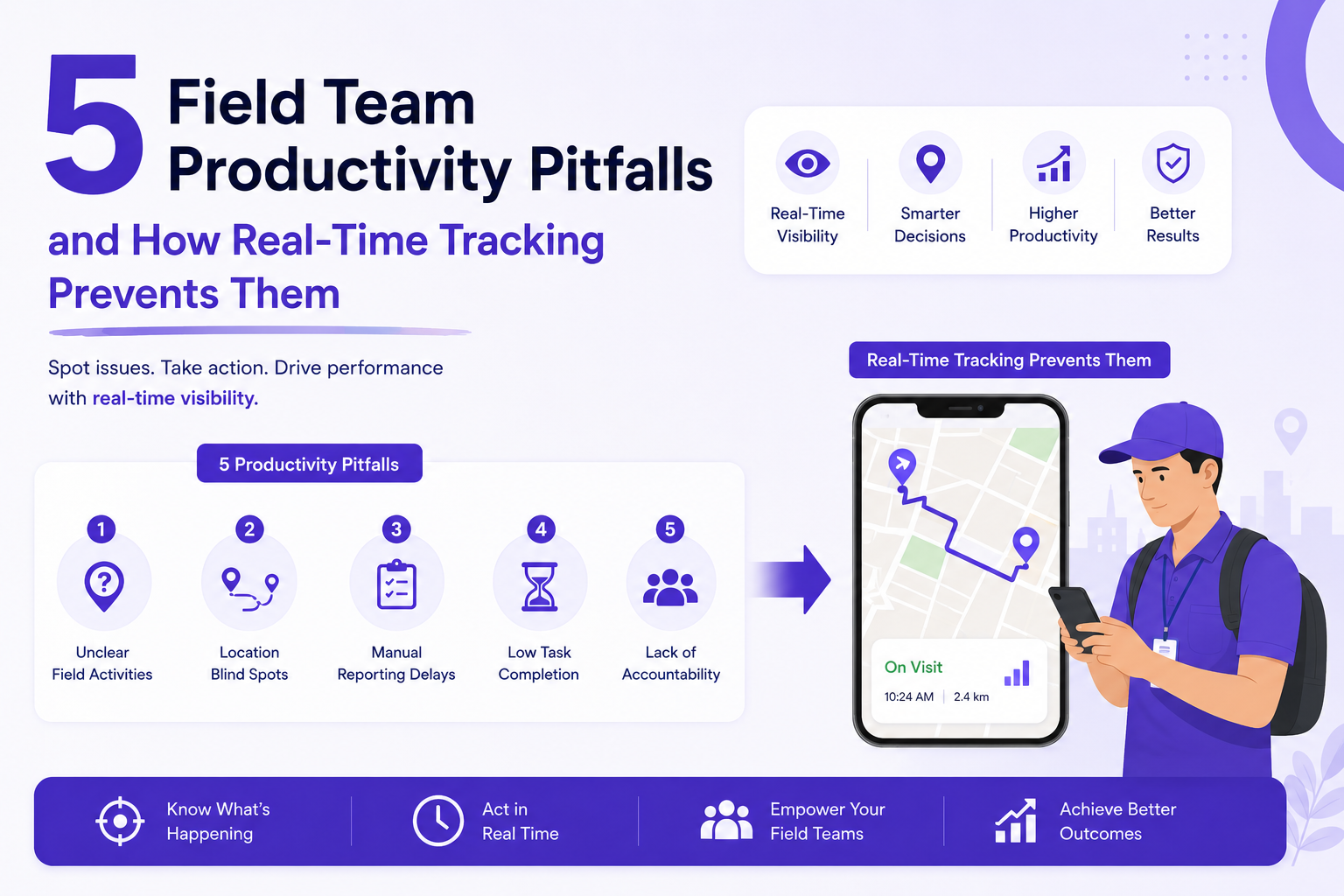
The problem isn't always effort; it's visibility. From inefficient travel and inaccurate time reporting to delayed task updates, small gaps can add up. Here are five common field team productivity pitfalls and how real-time tracking helps prevent each one.
Why Field Teams Are Harder to Manage Than Office Teams
Field teams operate away from direct supervision, making productivity harder to measure in real time. Unlike office employees who work in a shared environment, field employees spend much of their day travelling between locations, visiting clients, and completing tasks independently. This creates blind spots around transit time, idle hours, missed visits, and task progress.
Traditional check-ins and end-of-day reports only provide a snapshot of what happened. By then, it may be too late to address delays or inefficiencies. Real-time tracking gives managers better visibility into field operations as they happen, helping them respond faster and make decisions based on actual activity rather than assumptions.
Pitfall #1: No Visibility Into Real Location and Movement
Managers can't act on what they can't see. When field employees rely on manual check-ins or verbal updates, it's difficult to verify where they are, whether scheduled visits happened, or how efficiently they are moving between locations.
Manual reporting can also be delayed or inaccurate, leaving managers with limited information during the workday. This makes it harder to respond when an employee is stuck, a client visit is missed, or priorities suddenly change.
Real-time tracking helps solve this problem by providing live GPS visibility and location logs. Geofencing can also help businesses verify when employees enter or leave designated work areas. Instead of waiting for an employee to report their location, managers can access updated information through a central system.
This visibility allows managers to identify delays sooner, verify field visits, and improve workforce coordination without relying entirely on manual updates.
Pitfall #2: Inflated or Inaccurate Time Reporting
Self-reported timesheets can create gaps between the hours employees claim and the time actually spent on productive field activities. Employees may forget to record accurate timings, round off hours, or struggle to track multiple visits throughout a busy day. Forbes highlights that tracking time, service logs, and on-site activity data can provide a more comprehensive view of each job, helping businesses identify productivity highs and lows.
Real-time tracking provides a more objective way to understand time spent in the field. Automated, time-stamped activity logs can record when work begins and ends, while visit duration tracking can help managers understand how long employees spend at specific locations. With accurate time data, managers can identify patterns, reduce manual reporting, and plan workloads more effectively. The goal isn't simply to monitor hours but to understand how those hours are being used.
Pitfall #3: Inefficient Route Planning and Wasted Travel Time
Unplanned routes can quietly consume a significant portion of a field employee's working day. Employees may travel back and forth between locations, cover overlapping territories, or take inefficient routes between appointments. Over time, this translates into lost productive hours, higher fuel costs, and unnecessary travel.
The problem becomes more complex when managers don't have historical movement data to understand where these inefficiencies occur. Without visibility into travel patterns, route planning often depends on assumptions rather than actual field data.
Real-time tracking can help businesses improve route planning by providing visibility into employee movement and travel patterns. Historical location data can reveal frequently travelled routes, common delays, and areas where schedules may be overlapping.
With better information, managers can plan territories and assignments more efficiently. Route suggestions and movement insights can also help employees spend less time travelling and more time completing meaningful field activities.
Pitfall #4: Delayed Task Updates and Poor Coordination
A delay between field activity and reporting can slow down the entire operation. When employees update task progress only at the end of the day, managers may not know that a visit was completed, a task was delayed, or a client needs immediate attention until hours later. According to Forbes, outdated manual processes and disconnected systems can create limited visibility into field activities, leading to scheduling inefficiencies and delayed responses.
Real-time tracking combined with live task updates creates a more connected workflow. Employees can update task statuses as work progresses, while managers can view relevant information through a central dashboard. This allows teams to identify delays sooner, reassign tasks when necessary, and coordinate resources more effectively. Everyone works with the same updated information, reducing the communication gaps that often slow field operations.
Pitfall #5: No Data to Measure or Improve Performance
Without reliable data, performance management becomes guesswork. Managers may know that a team is underperforming but have no clear way to identify why. Similarly, high-performing employees may not receive recognition because their contribution isn't measured objectively.
Field tracking data can provide a clearer picture of performance. Analytics dashboards can help managers monitor productivity trends, attendance, working hours, travel patterns, task completion, and field activity over time.
This data makes it easier to establish meaningful benchmarks and identify patterns across teams or individuals. Managers can see where employees may need additional support, training, or better workload distribution.
Performance data should not be used simply to rank employees. Its real value lies in helping businesses understand what is working, identify bottlenecks, and make informed improvements. With the right insights, managers can use coaching and resource allocation to improve overall team performance.
What Real-Time Tracking Actually Changes for Field Teams
Real-time tracking brings the five productivity fixes together by replacing visibility gaps with actionable information. Managers gain a clearer view of where employees are, how time is being spent, how tasks are progressing, and where operational bottlenecks exist.
For field employees, this can create accountability without constant check-ins or micromanagement. For managers, it means making decisions based on real-time information instead of delayed reports.
Solutions such as We360.ai help businesses bring workforce activity, location insights, time data, and productivity analytics into one platform. The result is a more transparent way to manage distributed teams while giving businesses the data they need to improve operations over time.
FAQs
Is real-time tracking the same as micromanagement?
Not necessarily. When used responsibly, real-time tracking provides visibility into field operations without requiring constant calls or manual check-ins. It can reduce micromanagement by giving managers reliable information to make decisions independently.
What data does field tracking software actually collect?
Depending on the software and settings, it may collect location data, GPS movement, attendance, working hours, task activity, visit duration, and other workforce-related information. Businesses should always follow applicable privacy laws and clearly communicate tracking policies to employees.
How quickly can a company see productivity improvements?
The timeline depends on the size of the team, existing processes, and how the tracking data is used. Some businesses may identify immediate issues such as inefficient routes or delayed tasks, while longer-term improvements come from analysing trends and adjusting workflows.
Does real-time tracking work for teams without smartphones?
It depends on the tracking solution and the devices available to the field team. Many modern workforce management platforms are designed for mobile use, while some businesses may use other connected devices or systems for location and activity tracking.
Conclusion
Field team productivity pitfalls aren't always a people problem; they're often a visibility problem. When managers can't see where time, travel, and tasks are going, inefficiencies can remain hidden.
Real-time tracking helps turn those blind spots into actionable insights, enabling better accountability, coordination, and performance management.
By bringing location, time, task, and performance data together, businesses can identify inefficiencies early and take action before they impact productivity or customer service.
With a solution like We360.ai, businesses can gain the visibility needed to manage field teams more efficiently and make smarter, data-backed decisions.
.png)