
The modern corporate landscape is currently navigating a fundamental shift in how work is conceptualized, executed, and measured across global boundaries. As organizations transition toward permanent hybrid and remote models, the traditional methods of oversight—physical presence and manual check-ins—have proven insufficient for the digital era. This transition has birthed a visibility gap where managers struggle to understand team engagement while employees often feel isolated or over-burdened by "invisible" workloads.
We360.ai addresses this disconnect by providing an intuitive, enterprise-grade workforce analytics platform that prioritizes clarity over complexity. At its core, the software is designed to transform raw digital activity into actionable intelligence that benefits both leadership and the workforce. By defining the core concept of workforce management through the lens of transparency and data-driven insights, the platform ensures that productivity is no longer a matter of guesswork.
The implementation of such a platform is not merely about tracking hours; it is about building a resilient, high-performing culture that can thrive in a distributed environment. This report explores how simple, data-backed monitoring can resolve the most pressing challenges in contemporary management while fostering an environment of accountability and wellness.
The Modern Management Challenge: Overcoming the Visibility Gap
Businesses today operate in an era of unprecedented complexity, where teams are often spread across multiple time zones and digital platforms. This fragmentation has introduced a series of operational hurdles that can stagnate growth if not addressed by specialized technology solutions. Managers in 2026 face significant pressure to ensure that projects are completed within timeframes and budgets, yet they often lack the tools to see who is busy and who needs support.
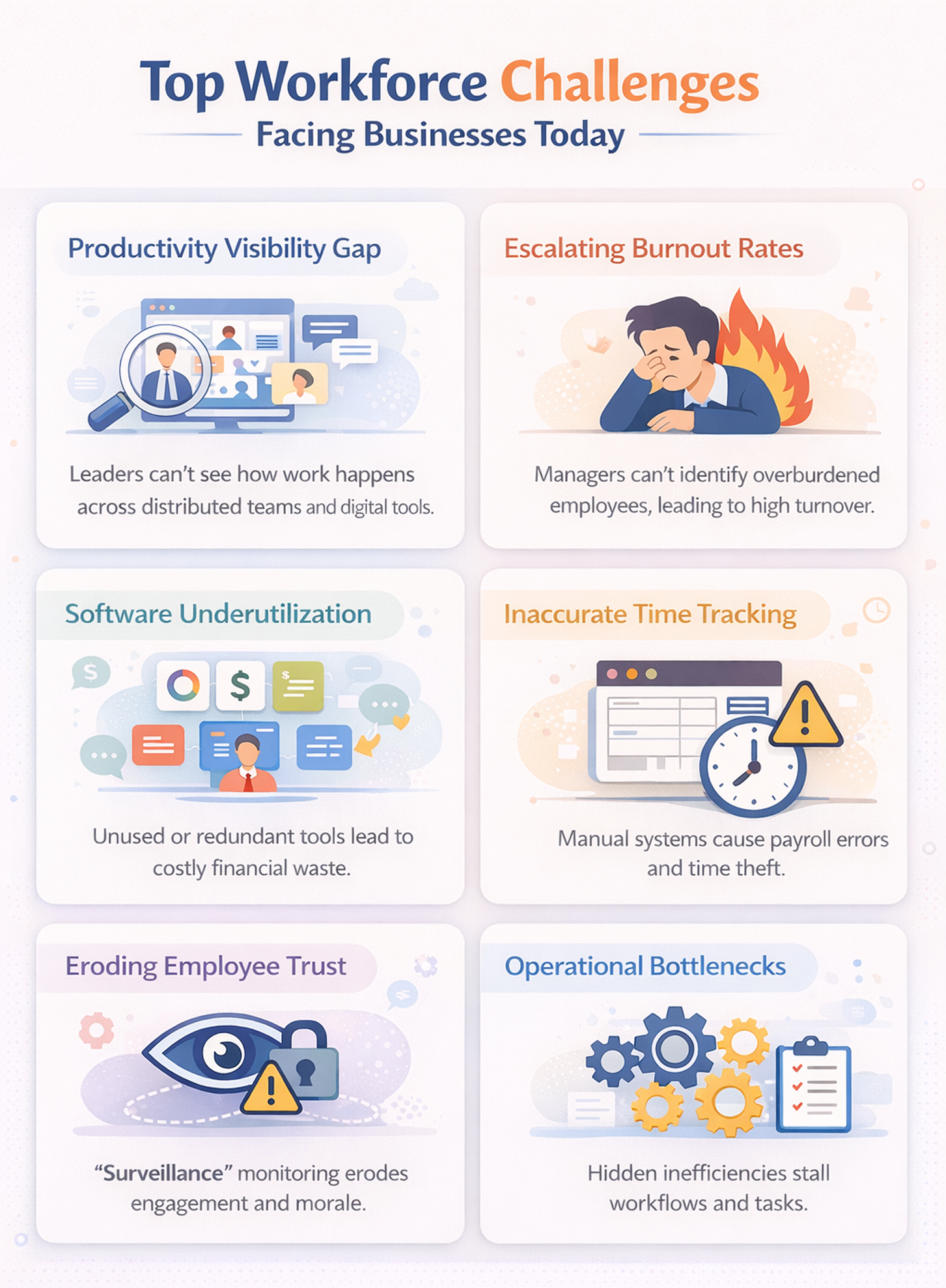
The primary challenges businesses face in the current workforce landscape include:
- The Productivity Visibility Gap: Leaders cannot see how work actually happens across distributed teams and digital tools.
- Escalating Burnout Rates: Research indicates that up to 83% of workers feel some degree of burnout, which often goes unnoticed without data.
- Significant Financial Waste: Organizations often fail to identify underutilized software licenses, leading to up to 38% waste in tech budgets.
- Inaccuracies in Time Tracking: Outdated manual systems lead to payroll discrepancies and "time theft" that impact the bottom line.
- Eroding Employee Engagement: Without objective metrics, high-performing employees face a 32% increase in turnover risk when recognition is absent.
- Operational Bottlenecks: Hidden inefficiencies remain unresolved because managers lack the data to analyze workflow sequences.
These challenges create a reactive management environment where issues are only addressed after they impact profits. For instance, without a clear view of workload distribution, the psychological toll of "invisible work" leads to decreased morale. To counteract these issues, organizations require a sophisticated workforce analytics platform that can interpret the context of work.
What is a Workforce Analytics Platform?
A workforce analytics platform is an enterprise-grade software solution designed to provide real-time visibility into digital productivity and organizational health. By consolidating data from time tracking, application usage, and activity levels into a unified dashboard, it transforms raw digital signals into actionable insights. The software empowers organizations to optimize workflows, improve accountability, and support employee wellness across remote, hybrid, and in-office environments.
Functional Mechanism: How We360.ai Drives ROI
The operational framework of We360.ai is built upon a lightweight monitoring agent that integrates seamlessly into an employee's workstation. This agent operates quietly in the background, ensuring that data collection does not interrupt the natural flow of work. Once installed, the system begins a continuous cycle of data ingestion and analysis, feeding a centralized dashboard that managers can access from any location.
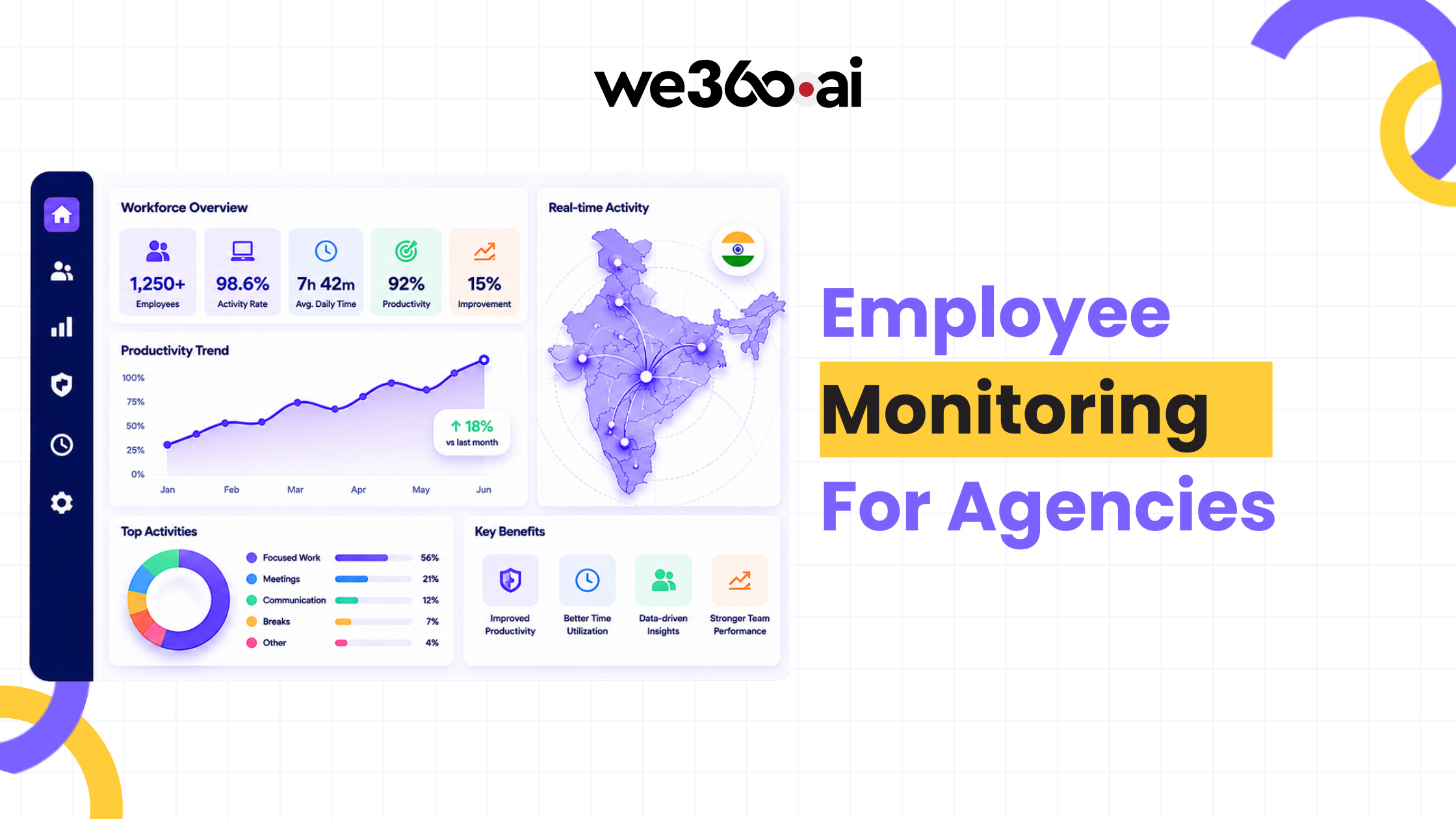
The platform collects data such as application usage durations, website visits, and keyboard/mouse activity patterns. This information is categorized into productive, unproductive, or neutral segments based on the organization's specific goals. The software also provides insights into real-time engagement levels, helping distinguish between deep, focused work and idle system states.
We360.ai helps organizations transition from lagging to leading indicators of performance. Instead of waiting for end-of-month reports, supervisors can use real-time livestreams and automated alerts to intervene in the moment. By providing visual proof of work through periodic screenshots, the system ensures transparency without the need for constant verbal check-ins, significantly reducing administrative friction.
The Strategic Importance of High-ROI Workforce Analytics
For growing organizations, the adoption of a workforce analytics platform is a strategic imperative that directly impacts EBITDA. As companies scale, data-driven decisions regarding staffing and tool acquisition become the primary differentiator between success and stagnation.
1. Operational Efficiency and Cost Intelligence
Operational efficiency is enhanced when organizations can visualize hidden costs. We360.ai’s "Cost Intelligence" feature allows leaders to track spending against actual output. Users have reported recovering all implementation costs within just two months by identifying time theft and reclaiming wasted software budgets.
2. Workforce Visibility in Hybrid Environments
Maintaining visibility in hybrid workforce management is critical for culture. Without a window into remote operations, it is difficult to maintain recognition and accountability. Objective metrics ensure that remote work is no longer "invisible," allowing leadership to reward high performance accurately, which is a major driver for retention.
3. Data-Driven Decision-Making
Strategic planning requires understanding the current talent pool’s capabilities. Workforce analytics provides predictive models to forecast attrition and identify leadership gaps. By analyzing engagement trends, HR leaders can identify "flight risks" and improve the work environment before talent leaves.
4. Remote / Hybrid Work Relevance
In a distributed era, the dashboard acts as the digital office floor. It provides the visual cues lost when teams aren't physically together. This ensures that goals remain aligned across time zones, preventing the communication gaps that typically slow down growing enterprises.
Deploy Fast. See Impact Instantly with We360.ai
Choosing the right productivity monitoring tools is a decision that impacts every level of your organization. We360.ai offers a solution that balances deep operational visibility with a 3-minute setup that requires minimal IT intervention. Users report a 50% elevation in output and a 41% reduction in manual payroll work, proving that transparency can transform a team's financial results. Experience how workforce intelligence can lift your bottom line today. Start your free trial today.