

As leaders, the thought of scaling your organization in 2026 is often met with a mix of excitement and apprehension. The promise of new markets, increased revenue, and a growing team is compelling. Yet, the practicalities of managing that growth—especially when it comes to workforce productivity and operational efficiency—can feel daunting. How do you ensure your expansion is truly sustainable, without sacrificing the agility and focus that got you here?
This year, the challenge isn't just about how fast you can grow, but how intelligently. It's about building a foundation that supports exponential growth without introducing chaos or hidden inefficiencies. We'll explore how to approach your 2026 expansion with a clear strategy, leveraging insights that ensure your workforce scales effectively, your operations remain lean, and your leadership stays connected to the pulse of your organization.
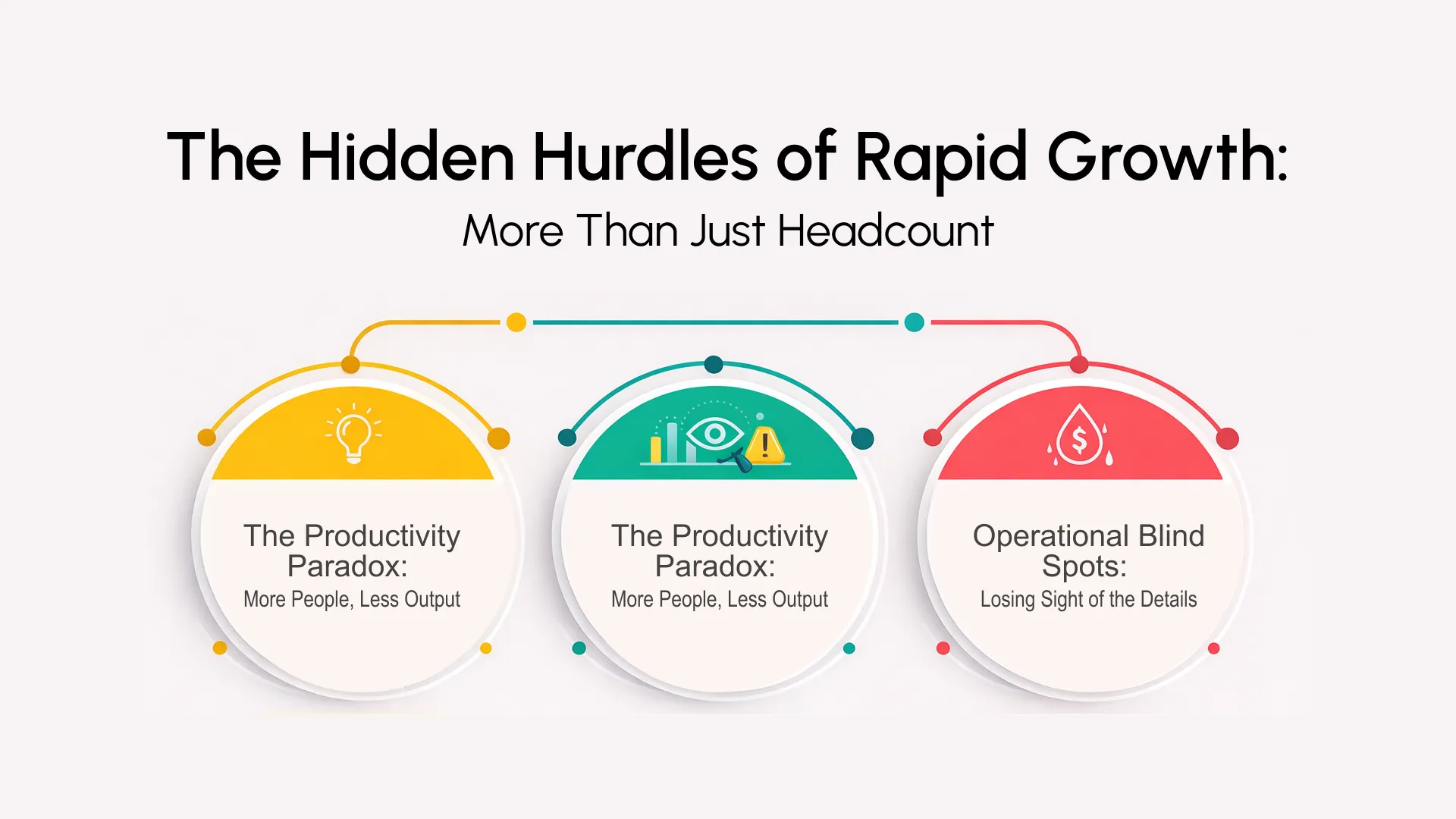
When a company expands, the focus often shifts to acquiring new talent, opening new offices, or launching new product lines. While these are crucial, the real complexities often lie beneath the surface, in the operational fabric of your workforce. Without clear visibility, rapid growth can inadvertently introduce significant challenges:
1. The Productivity Paradox: More People, Less Output?
It sounds counterintuitive, but simply adding more team members doesn't always equate to a proportional increase in output. As teams grow, communication lines lengthen, coordination becomes more complex, and the risk of context switching—where employees juggle too many tasks or meetings—skyrockets. This can lead to a phenomenon where overall team productivity plateaus or even declines, despite increased investment in human capital. Leaders need a way to understand not just who is working, but how work is flowing and where bottlenecks emerge.
2. Operational Blind Spots: Losing Sight of the Details
In a smaller, more centralized operation, leaders often have an intuitive grasp of daily activities. As you expand, especially across different locations or with remote teams, these insights become harder to maintain. Are new teams adopting best practices? Are resources being utilized efficiently across all departments? Without objective data, decisions about resource allocation, training needs, or process improvements become guesswork, leading to suboptimal outcomes and missed opportunities.
3. The Cost of Inefficiency: Draining Your Growth Budget
Every minute lost to inefficient processes, every hour spent on redundant tasks, and every instance of misallocated talent translates directly into financial cost. These aren't always obvious line items on a balance sheet; they're hidden leakages that erode profit margins and slow down your growth trajectory. For instance, inaccurate time tracking can lead to incorrect overtime payouts, while underutilized software licenses can drain budgets unnecessarily. Identifying and plugging these leaks is paramount for sustainable expansion.
Building a Foundation for Smart Scaling: Three Pillars of Workforce Intelligence
Intelligent expansion in 2026 isn't about working harder; it's about working smarter. It requires a strategic approach to workforce management that prioritizes clarity, efficiency, and adaptability. Here are three pillars to consider:
1. Transparent Activity Intelligence: Seeing the Unseen
To manage growth effectively, you need a clear, unbiased view of your workforce's daily activities. This isn't about surveillance; it's about understanding work patterns, identifying areas of high engagement, and pinpointing where teams might be struggling. By integrating real-time activity data with existing HR and project management systems, leaders can gain insights into:
- Workflow Efficiency: How long do specific tasks or projects typically take? Where are the common delays?
- Resource Utilization: Are team members overloaded or underutilized? Is talent being applied to the highest-priority initiatives?
- Tool Adoption: Are the expensive software tools you've invested in actually being used effectively?
This level of transparency empowers leaders to make data-backed decisions, ensuring that every team member's contribution is optimized and valued. It helps in identifying the need for additional training, process improvements, or strategic re-allocation of resources.
2. Seamless Integration: A Unified View of Your Workforce
Your organization likely already uses a suite of tools for HR, project management, and communication. The key to intelligent scaling is to unify the data from these disparate systems into a single, cohesive view. A powerful workforce analytics platform should seamlessly integrate with your existing tech stack, enriching your current data with real-time activity insights. This means:
- No Disruption to Existing Workflows: Your teams can continue using the tools they know and love, without the need for extensive retraining or process changes.
- Enriched Data for Better Decisions: By combining data from different sources, you can gain a more holistic understanding of your workforce. For example, you can correlate project management data with productivity metrics to see how different types of work impact team engagement.
- A Single Source of Truth: A unified platform eliminates data silos and provides a consistent, reliable source of information for all your leadership decisions.
3. Actionable Insights: From Data to Decisions
Data is only valuable if it leads to better decisions. An effective workforce intelligence solution should not just present you with raw data; it should provide actionable insights that you can use to drive meaningful change. This includes:
- Identifying High-Performers: Understand the work habits and patterns of your most productive team members, and use these insights to coach and mentor others.
- Preventing Burnout: Proactively identify employees who are consistently working long hours or showing signs of disengagement, and intervene before they burn out.
- Optimizing Team Structures: Use data to determine the optimal size and composition of your teams, ensuring that you have the right mix of skills and experience for each project.
Conclusion: Growth Without Guesswork
Expanding your organization in 2026 doesn’t have to be a leap of faith. By embracing a data-driven approach to workforce management, you can navigate the complexities of growth with confidence and clarity. The key is to move beyond guesswork and intuition, and instead, rely on objective insights that reveal the true dynamics of your workforce. With the right tools and a commitment to transparency, you can build a scalable, efficient, and highly productive organization that is poised for endless growth.


.png)